
The Porcelain Hatstand
China – Republic Period
1920
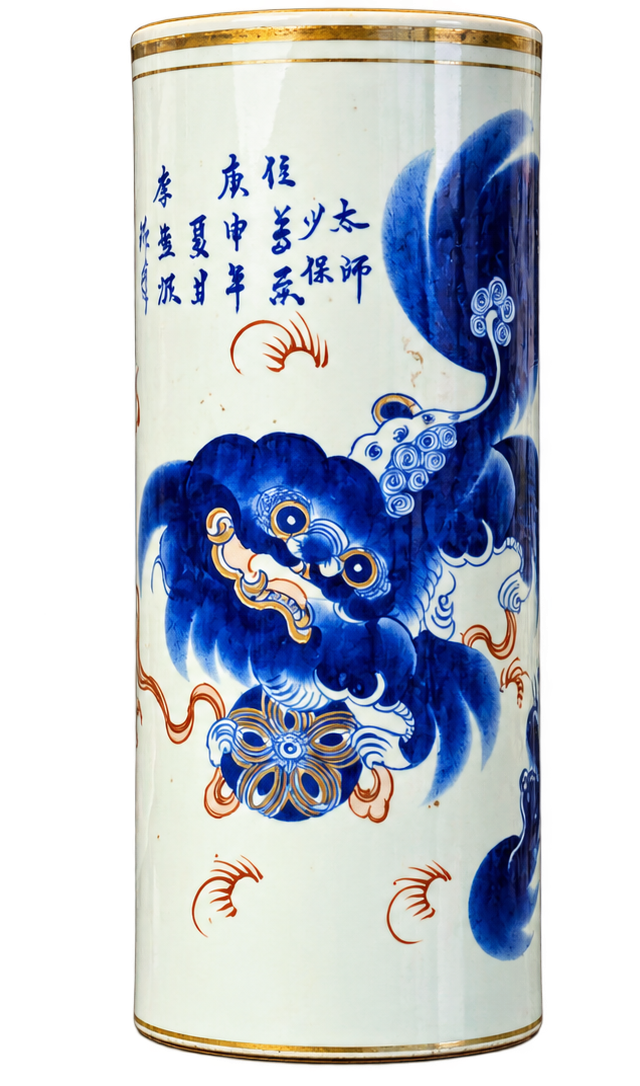
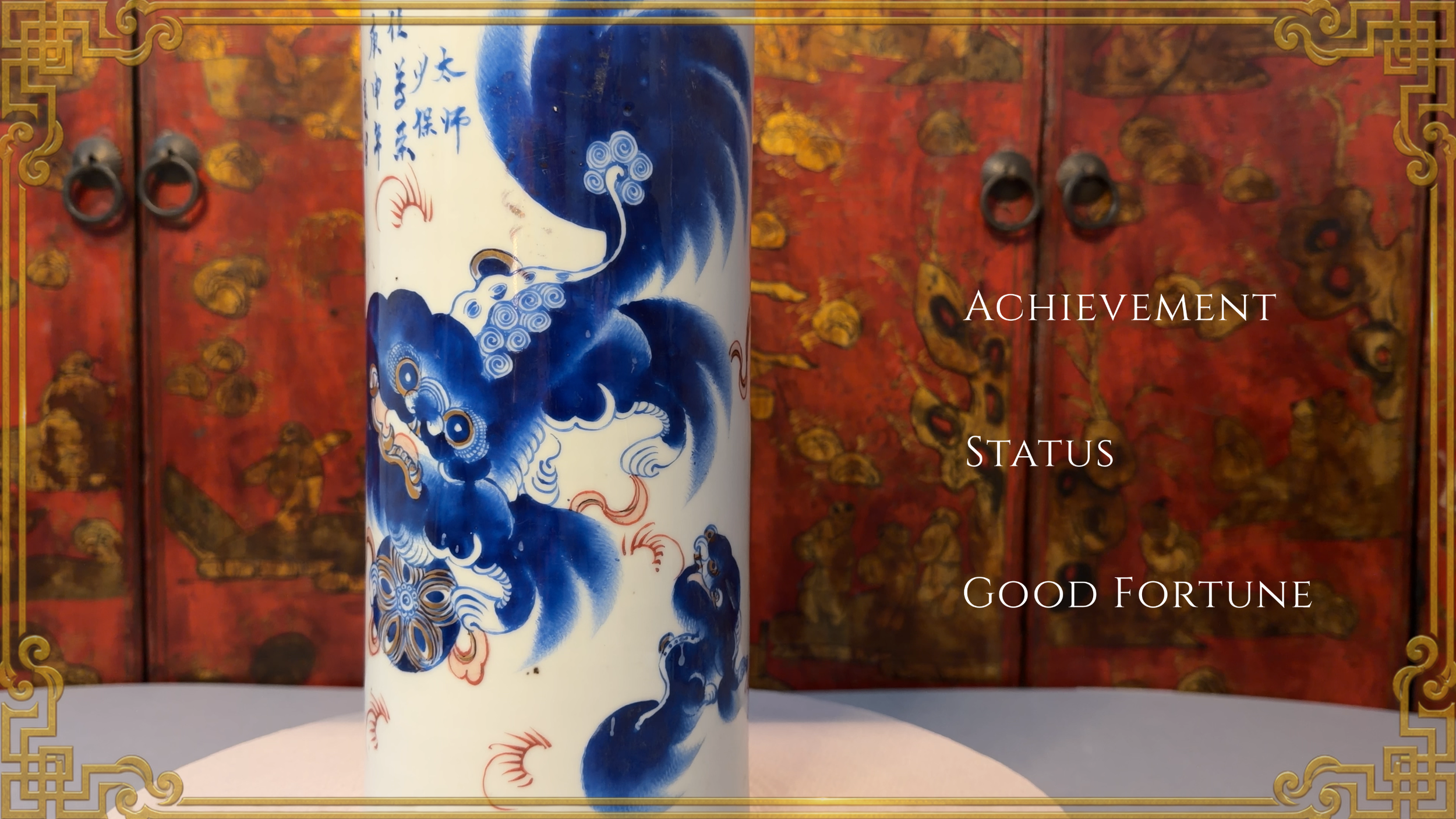
At first glance, it seemed simple enough: a tall blue-and-white porcelain vessel decorated with lions, calligraphy, and a narrow gold rim.
But nothing about it was quite what it seemed.
The form suggested one purpose. The inscription suggested another. And the more closely the piece was examined, the more it began to reveal a story rooted in rank, symbolism, political change, and the porcelain workshops of Jingdezhen.
What began as an inexpensive charity-shop purchase became a small historical mystery.
A Question of Function
Objects often survive long after their original purpose has been forgotten.
This vessel was initially easy to mistake for a brush pot or decorative cylinder. Its proportions, however, pointed elsewhere.
It belongs to a distinctive class of Chinese objects made to support formal hats — particularly the headwear associated with the late Qing and early Republican periods.
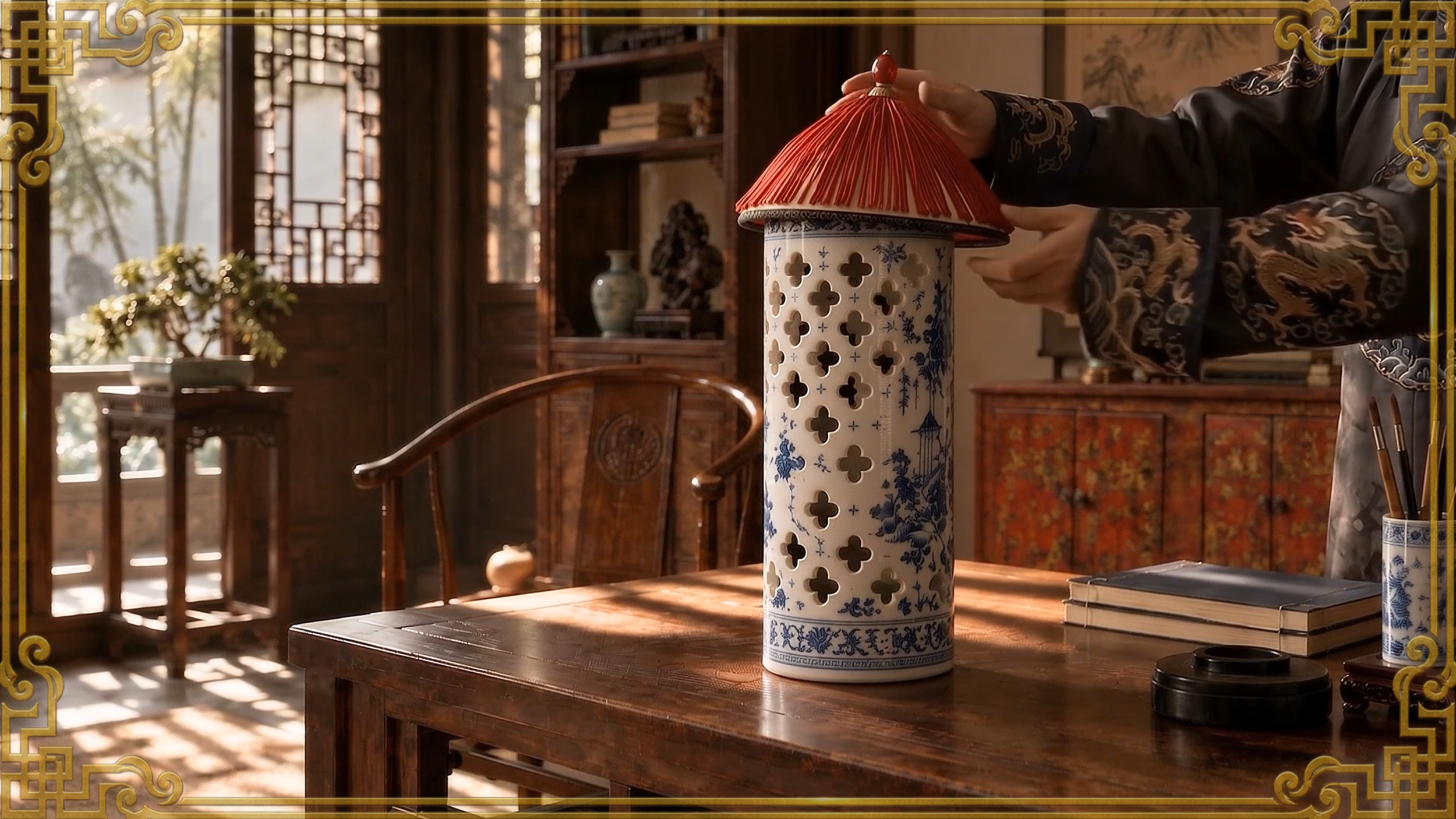
The function may seem unfamiliar today, but in its original setting the object would have been immediately understood.
A hatstand was not merely practical. It could also carry wishes for status, success, and continuity.
Lions, Rank and Ambition
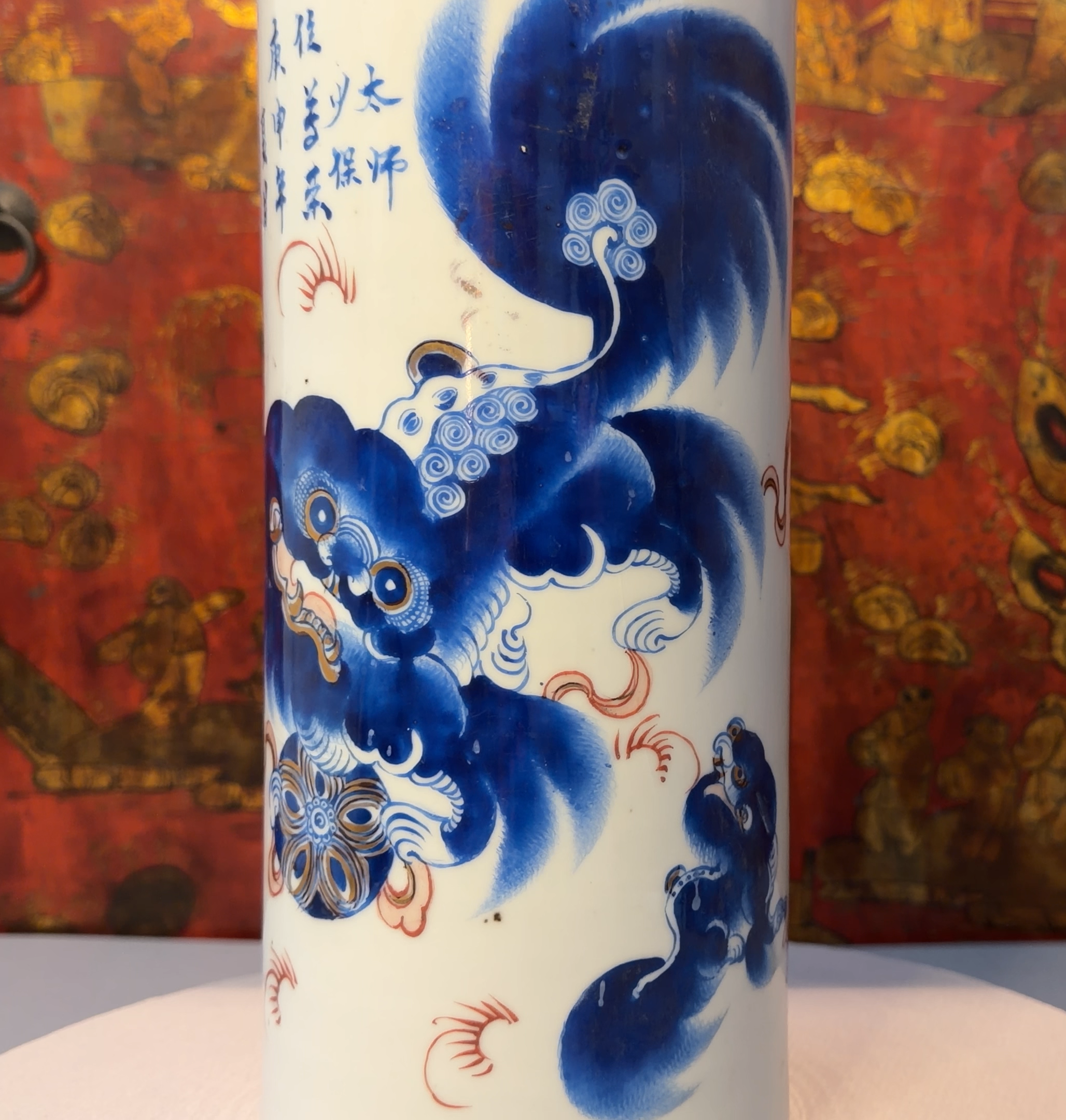
The painted lions are not simply decorative.
In Chinese visual culture, lions were closely associated with authority, prestige, protection, and official rank. On this piece, they form part of a larger language of aspiration.
The inscription 太師少保 — Tàishī Shǎobǎo refers to eminent court titles traditionally translated as Grand Preceptor and Junior Guardian.
Together, the words and imagery evoke success in office, high standing, and the hope that such fortune would continue through future generations.
The decoration was therefore doing more than filling the porcelain surface.
It was expressing an ideal.
The Date Hidden in the Inscription
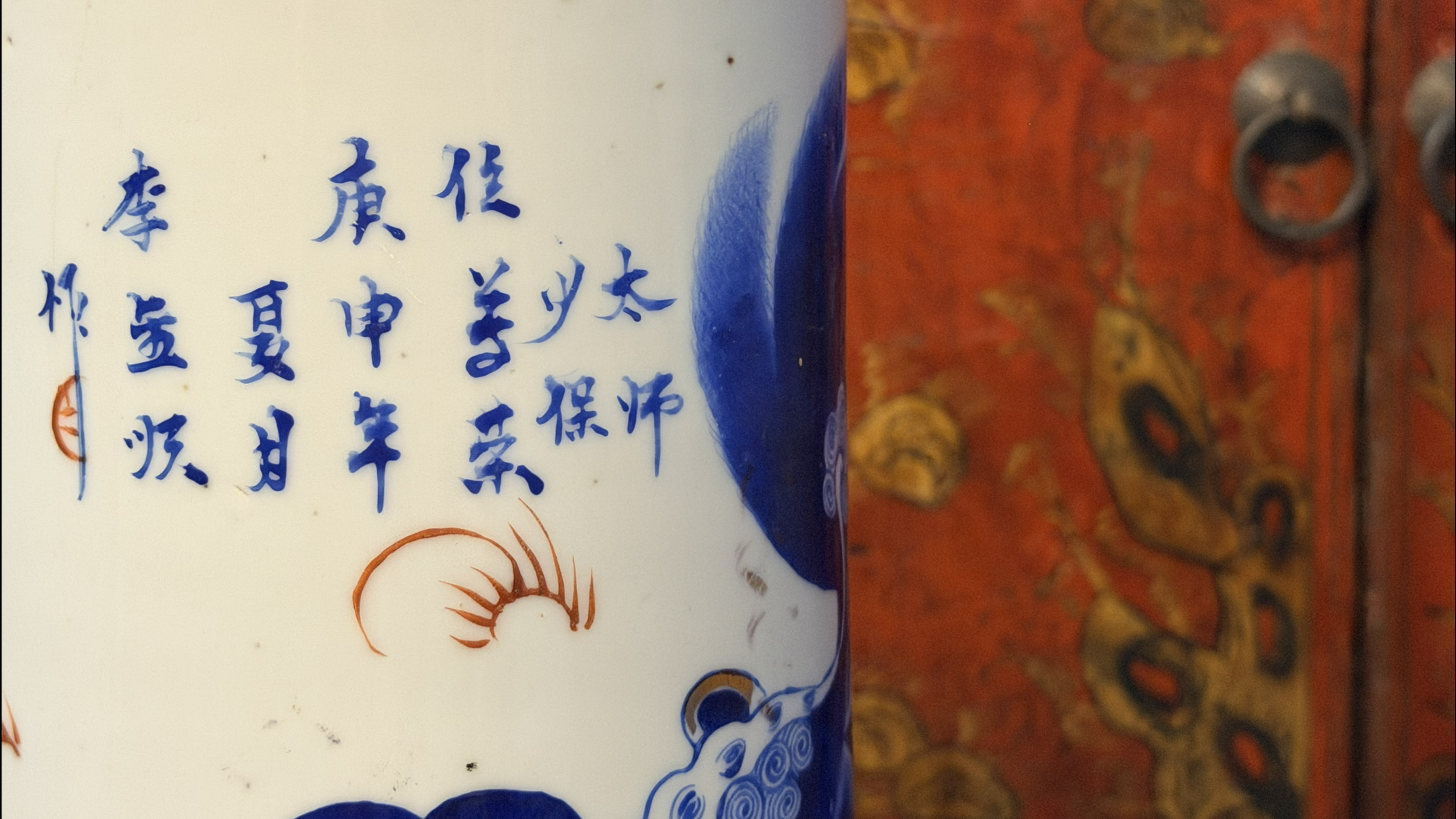
One of the most important clues appears in the cyclical date:
庚申 — gengshen
The traditional Chinese sexagenary cycle repeats every sixty years, so the inscription alone does not automatically identify a single Western calendar year.
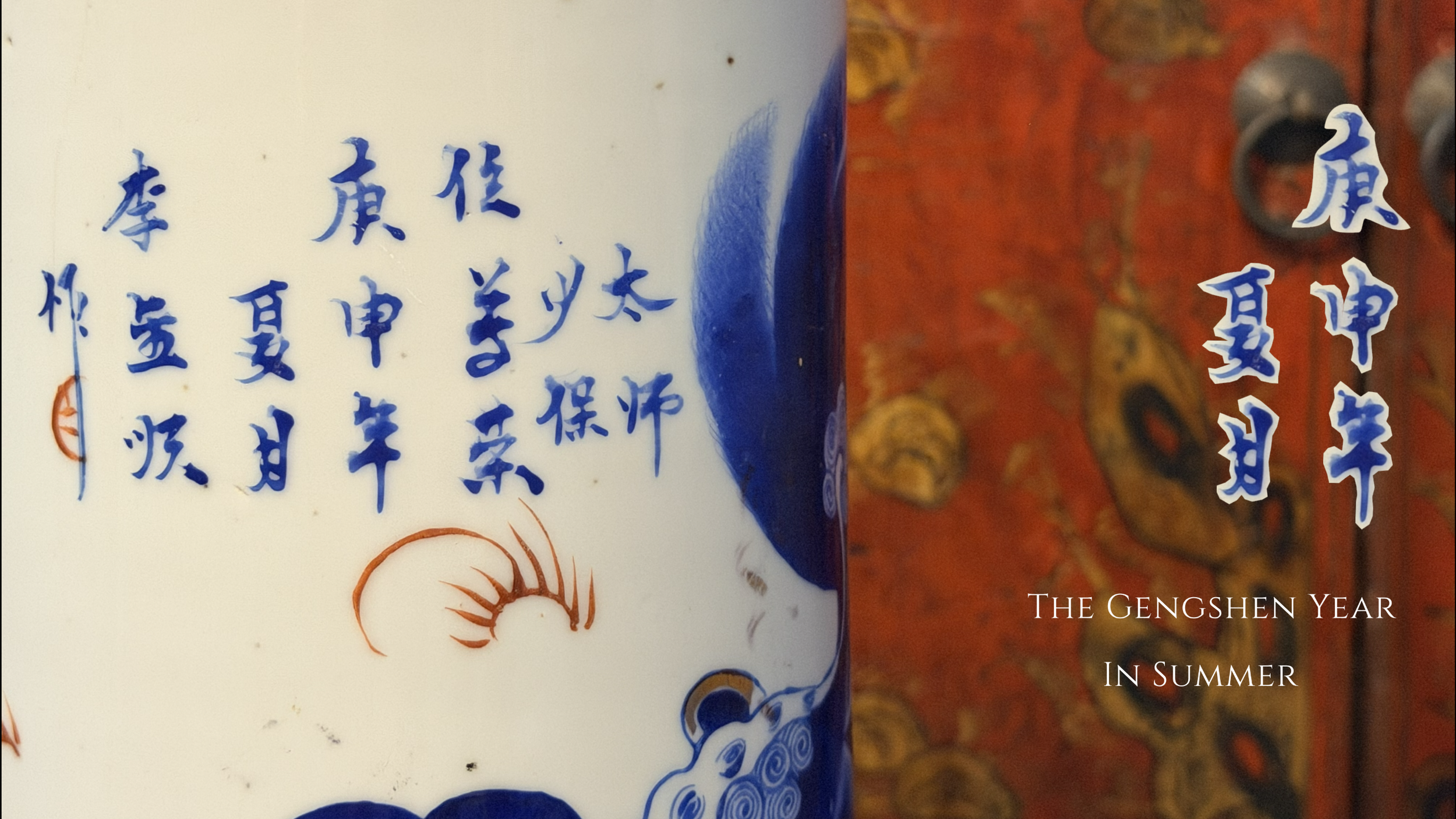
But taken together with the form, decoration, historical context, and expert guidance, the date corresponds to: 1920
That places the piece in the ninth year of the Republic of China, less than a decade after the end of imperial rule.
It was a moment when older cultural forms and newer political realities existed side by side.
Made in Jingdezhen
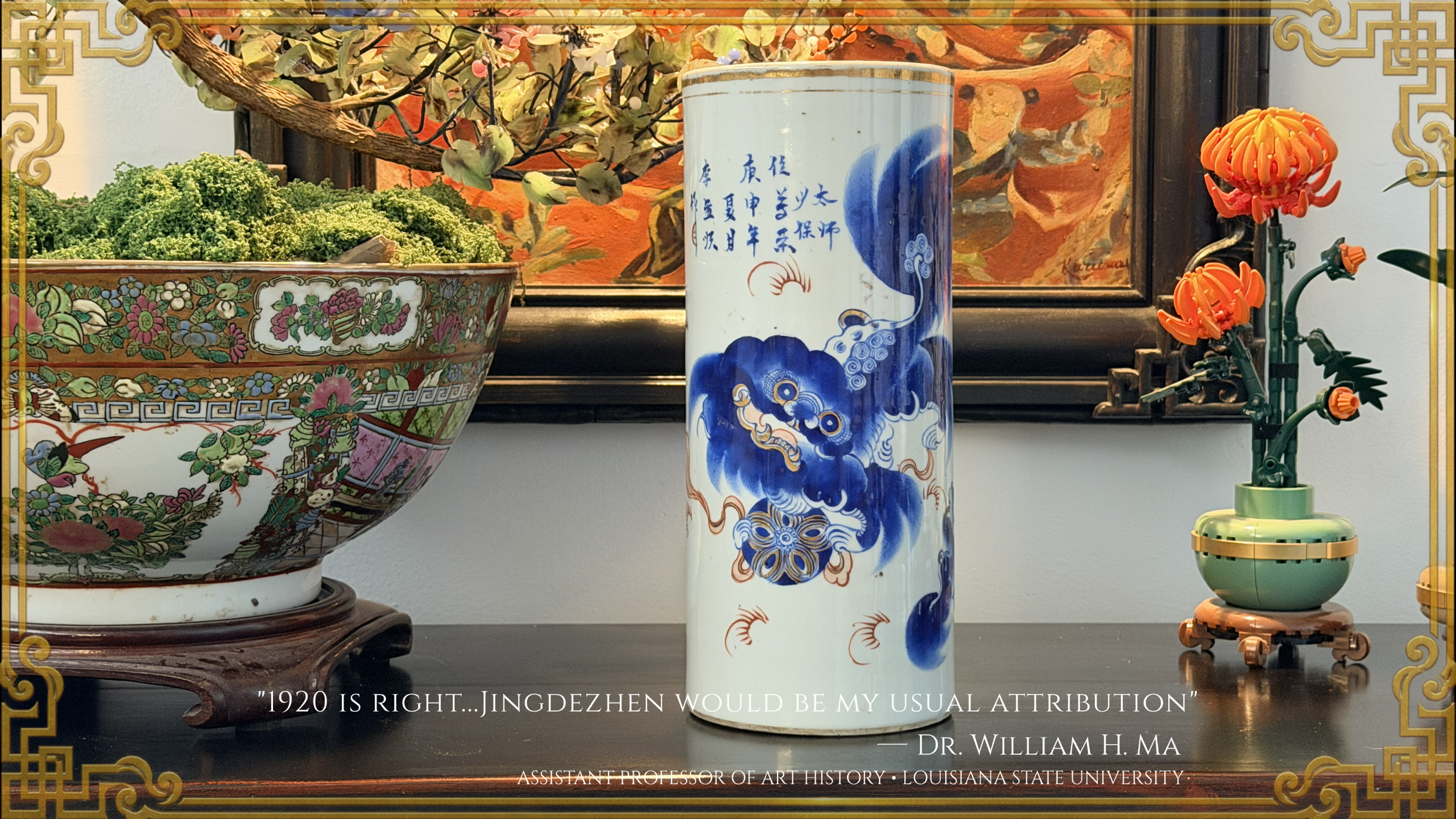
The episode also raised an important question: where was the piece made?
That answer came through correspondence with Professor Ma of the China Academy of Art, who identified Jingdezhen as the place of manufacture.
For centuries, Jingdezhen had been one of the great centers of Chinese porcelain production.
By 1920, imperial China was gone, but the knowledge, workshops, motifs, and decorative traditions associated with porcelain manufacture had not disappeared with it.
This hatstand belongs to that transitional world.
Li Jinshun
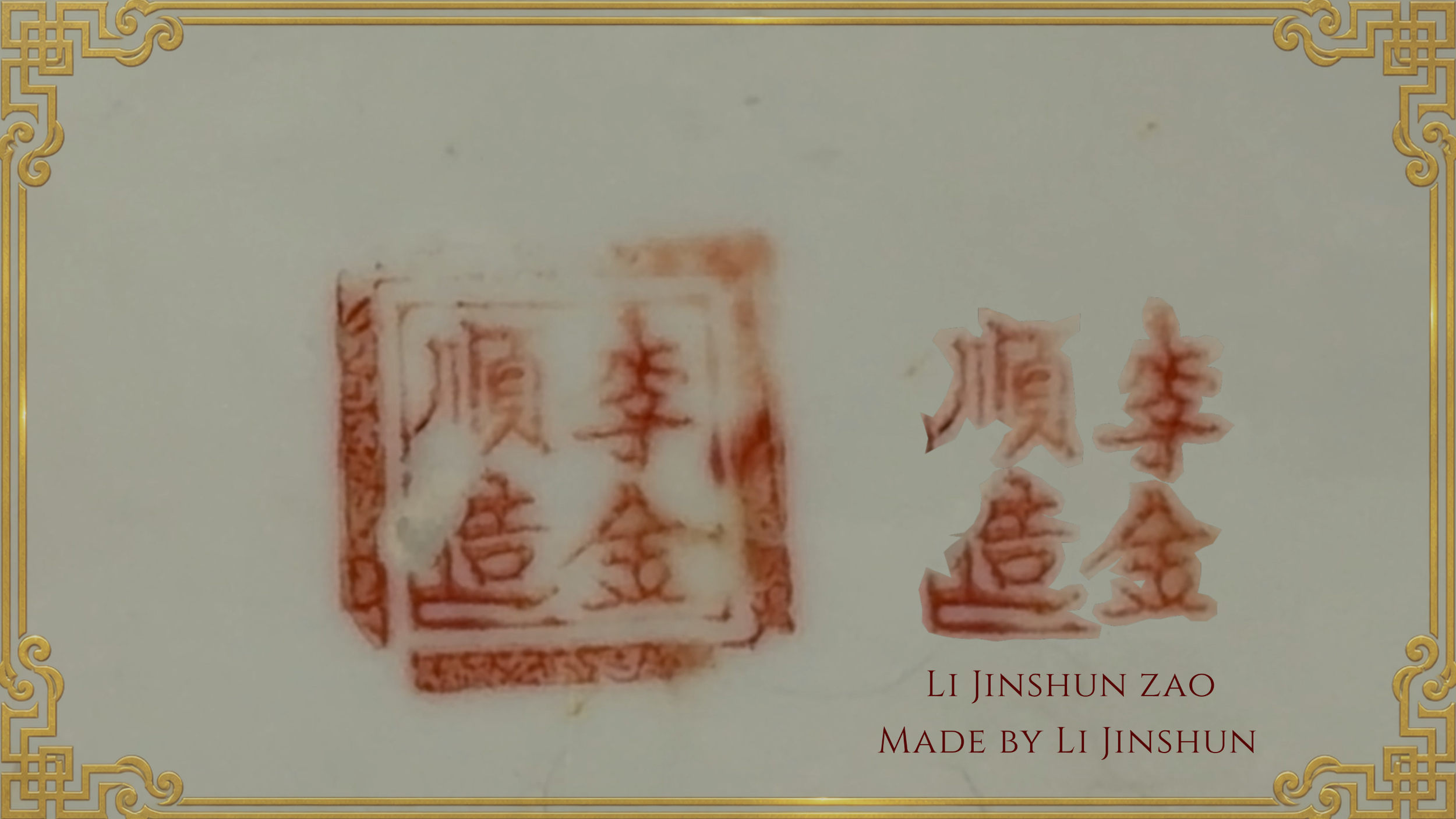
The piece also bears the name associated with Li Jinshun.
As with many workshop names found on Chinese porcelain of this period, surviving documentation can be difficult to trace. Yet the inscription gives the object something many antiques never retain:
a connection, however incomplete, to the people who made and sold it.
That single name helps move the piece away from anonymity.
China in Transition
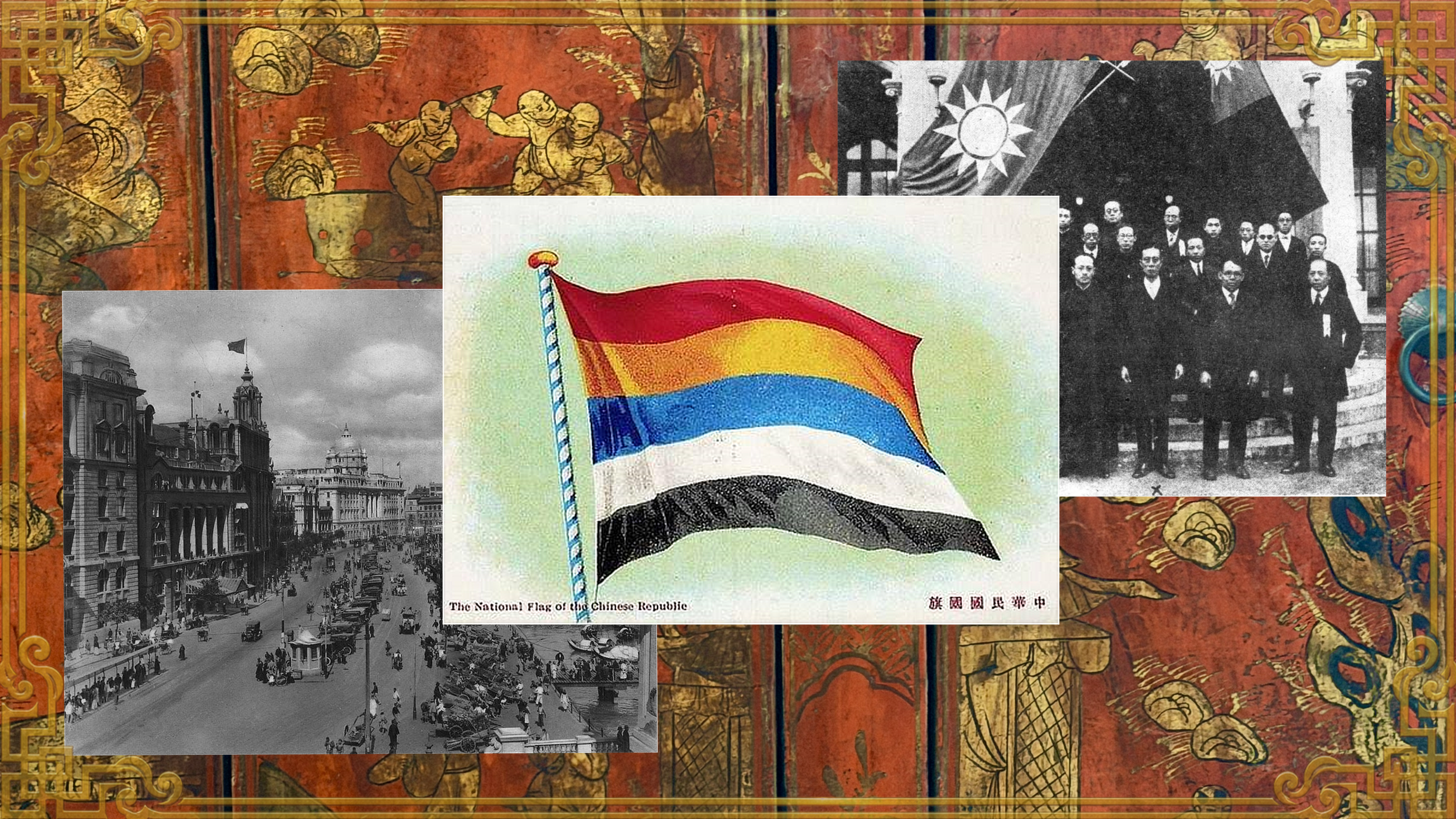
The Republic of China was established in 1912, bringing more than two thousand years of imperial rule to an end.
Yet political change did not erase cultural habits overnight.
Objects continued to carry older symbols of rank, prosperity, family advancement, and social identity.
That is part of what makes this hatstand so interesting.
It was made in a new republic, but it still spoke in the visual language of the world that had come before it.
Watch Episode 003 — The Porcelain Hatstand
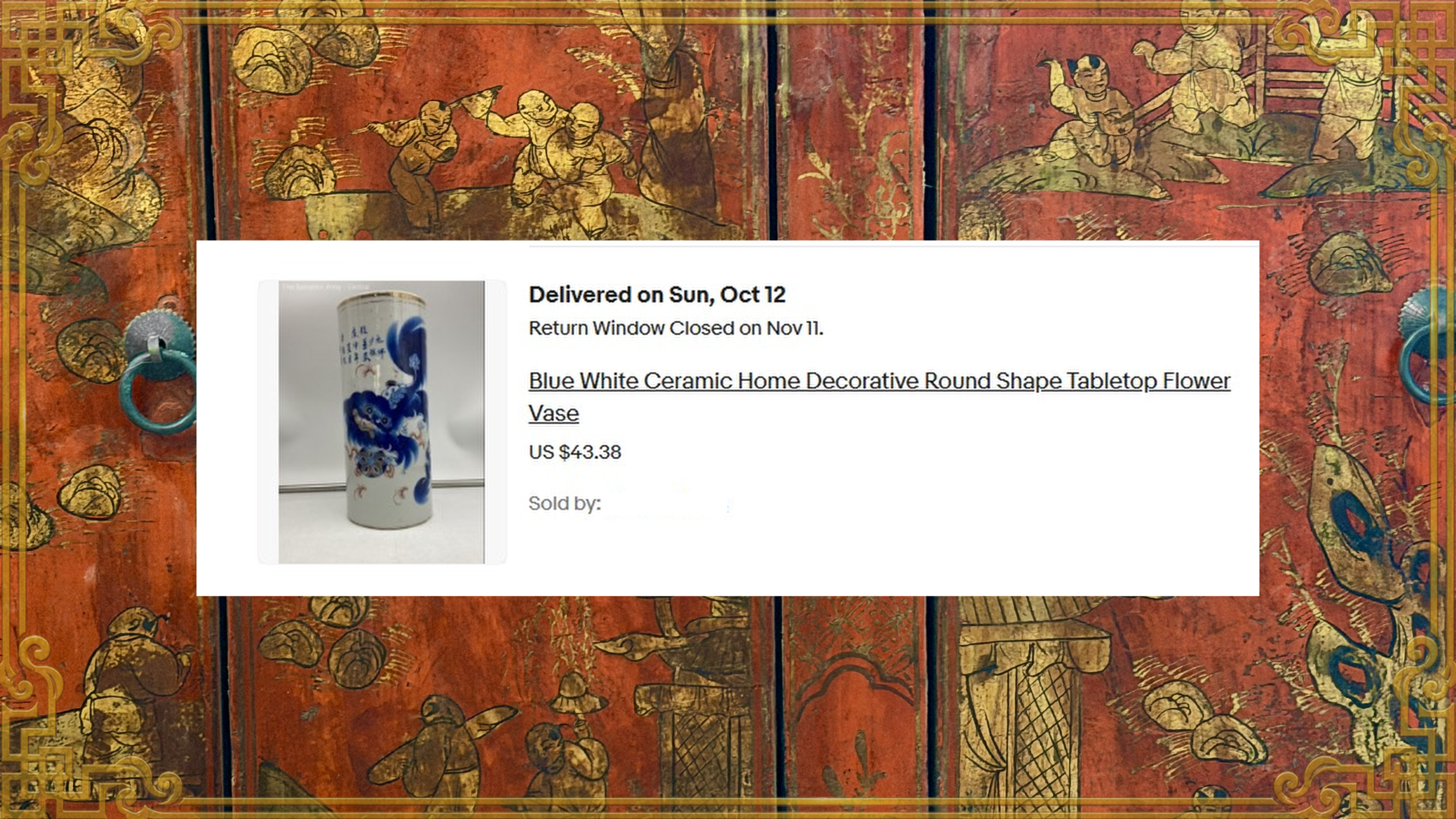
A $43.38 eBay purchase led to Chinese court titles, cyclical dating, Jingdezhen porcelain production, and the changing world of Republican China.
What looked like a simple blue-and-white cylinder had been carrying its story all along.
The clues were there.
They simply had to be read.
Object Details
Object: Porcelain Hatstand
Origin: China
Period: Republic Period
Date: 1920
Place of Manufacture: Jingdezhen
Associated Name: Li Jinshun
Decoration: Blue-and-white porcelain with lion imagery, inscription, and gilt rim
Inscription: 太師少保 — Tàishī Shǎobǎo
Cyclical Date: 庚申 — gengshen
Purchase Price: $43.38 delivered
RESEARCH NOTE
The identification of this object as a porcelain hatstand is based on its form, proportions, decorative program, and comparison with documented Chinese examples from the late Qing and early Republican periods.
The inscription includes the cyclical date 庚申 — gengshen, corresponding here to 1920, and the phrase 太師少保 — Tàishī Shǎobǎo, associated with high court rank and auspicious wishes for status and advancement.
The attribution to Jingdezhen as the place of manufacture is supported by correspondence with Professor William H. Ma, who identified Jingdezhen as the likely place of production and agreed that 1920 is the appropriate date.
The name Li Jinshun is preserved in the maker or workshop mark on the base. At present, no definitive archival biography or workshop history has been located, and the precise nature of Li Jinshun’s role remains unresolved.
What We Keep favors documented objects, museum collections, period sources, and identifiable expert opinion wherever possible. Where evidence remains incomplete, uncertainty is retained rather than resolved through assumption.
Research into the hatstand is ongoing. This record may be revised should further evidence concerning its workshop, maker, original function, ownership, or production context emerge.
SOURCES & FURTHER READING
China Academy of Art — Professor William H. Ma
Expert correspondence concerning the date and place of manufacture of the hatstand, including identification of Jingdezhen as the likely production center and confirmation that 1920 is consistent with the inscription and object.
The Metropolitan Museum of Art — Rank Badge with Lion
Museum collection record documenting the lion as an emblem of high military rank in Qing official insignia. https://www.metmuseum.org/art/collection/search/64915
SFO Museum — Everyday Elegance in Chinese Ceramics
This is the best public museum source for the object type. It documents late-Qing and Republican-period porcelain hatstands, including a 1922 lion-decorated example from Jingdezhen, and discusses their use. https://www.sfomuseum.org/exhibitions/chinese-ceramics/gallery
Christie’s — Jiaqing Porcelain Hatstand
Useful as an earlier historical source showing that tubular porcelain hatstands were established by the Jiaqing period and explaining that they functioned both as hat supports and, in pierced examples, as vessels through which incense could perfume the hat. https://www.christies.com/zh/lot/lot-6382856
Hong Kong Observatory — Heavenly Stems and Earthly Branches
Explanation of the traditional Gan-Zhi sexagenary cycle, in which ten Heavenly Stems and twelve Earthly Branches combine to form a repeating sixty-term system used to designate years. This system was used to interpret the inscription 庚申 — gengshen. https://www.weather.gov.hk/en/gts/time/stemsandbranches.htm
Jingdezhen Porcelain — Historical Context
Background on Jingdezhen as one of China’s principal porcelain-production centers and its continued importance into the Republican period.
Chinese Sexagenary Cycle — 庚申 (gengshen)
Reference material used to interpret the cyclical date and place it within the historical context of the Republic of China.
Chinese Official Titles — 太師少保 (Tàishī Shǎobǎo)
Reference material concerning traditional court titles and their auspicious use in decorative and literary contexts.
Late Qing and Republican Chinese Hatstands
Museum and auction comparables used to assess form, function, decorative conventions, and period context.
Republic of China — 1912–1949
Historical background used to place the object within the transitional period following the end of imperial rule.