

An Unknown Woman
Her name has been lost, and so has the name of the artist who painted her.
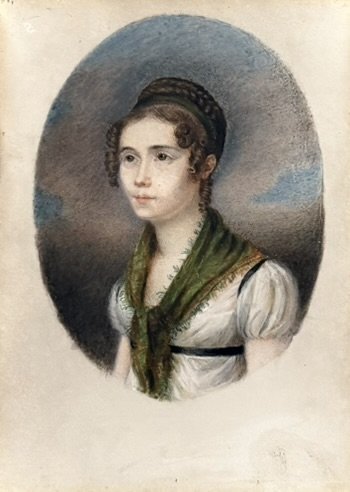
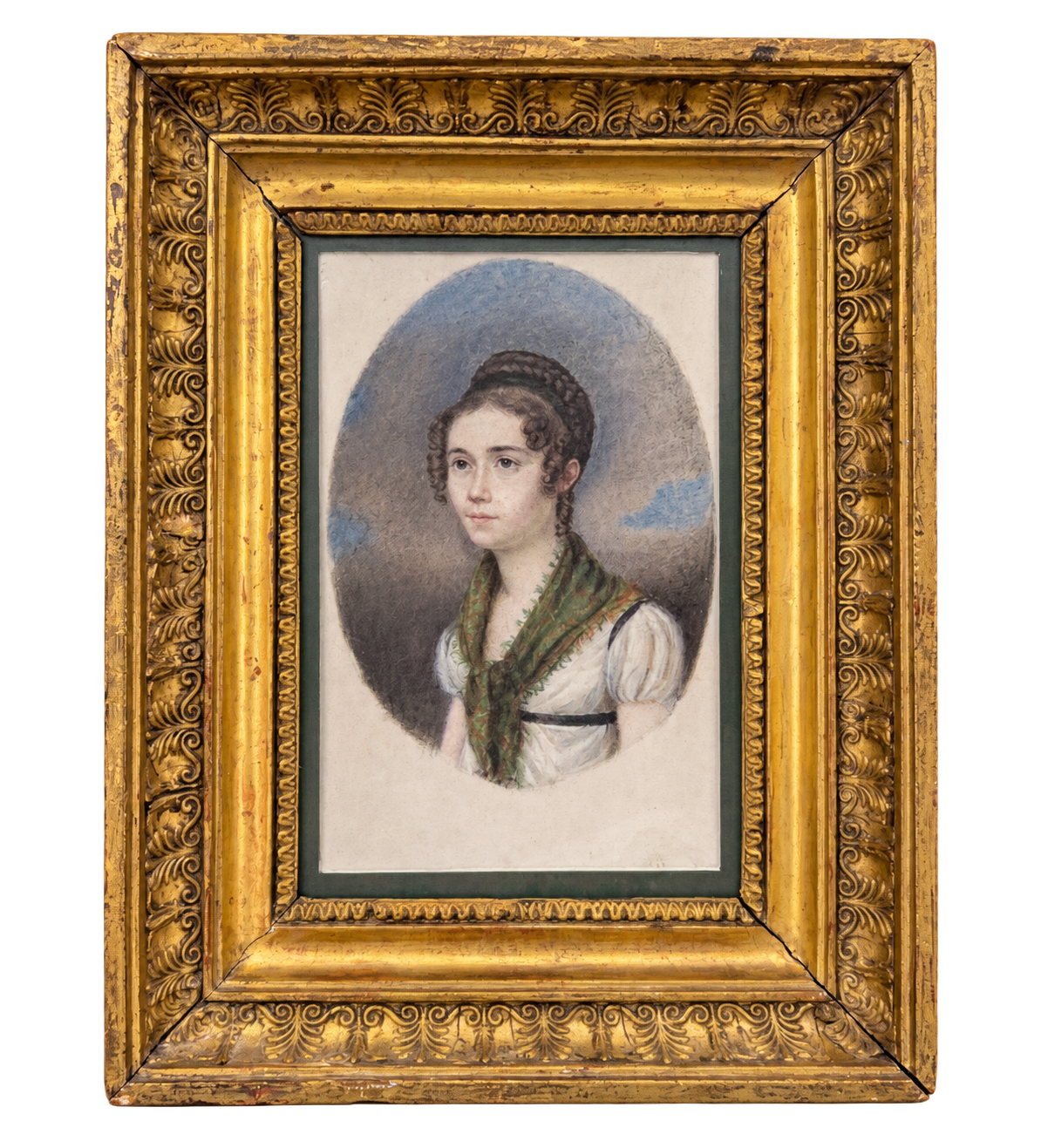
What remains is a remarkably delicate portrait of a young woman from a world poised on the edge of enormous change.
She was painted, most likely in England, near the end of the reign of King George III, just as Britain was about to enter the Regency. The King was increasingly unwell, and within a year his son would assume his duties as Prince Regent.
Across the Atlantic, the United States was still a young country, little more than a generation removed from independence, the ink barely dry on its Constitution.
Across the English Channel, Emperor Napoleon was in the middle of his reign, dominating much of Europe, while the elegant neoclassical fashions associated with his wife, Joséphine—the high waist, pale gowns and classical simplicity—had spread far beyond Paris.
And somewhere in England, at roughly the same moment our young woman sat for her portrait, Jane Austen was preparing Sense and Sensibility for publication—a novel that would give the world, and generations yet to come, a glimpse into the society and the world where this woman lived.
Unfortunately, she seems to have forgotten to leave us her calling card. Whoever she was, this small portrait is now all that remains to tell us she was here.
DATING THE PORTRAIT
Clothing can rarely date a portrait to a particular year. Fashion changed gradually, and people did not necessarily adopt the newest styles immediately.
Taken together, however, the young woman's appearance provides useful evidence.
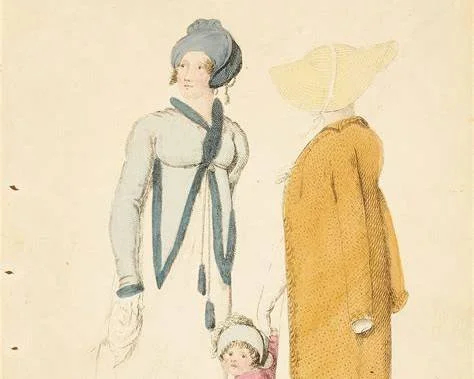
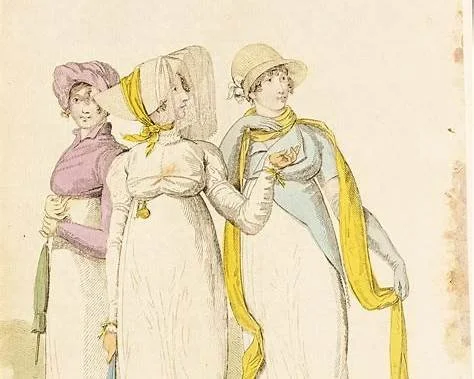
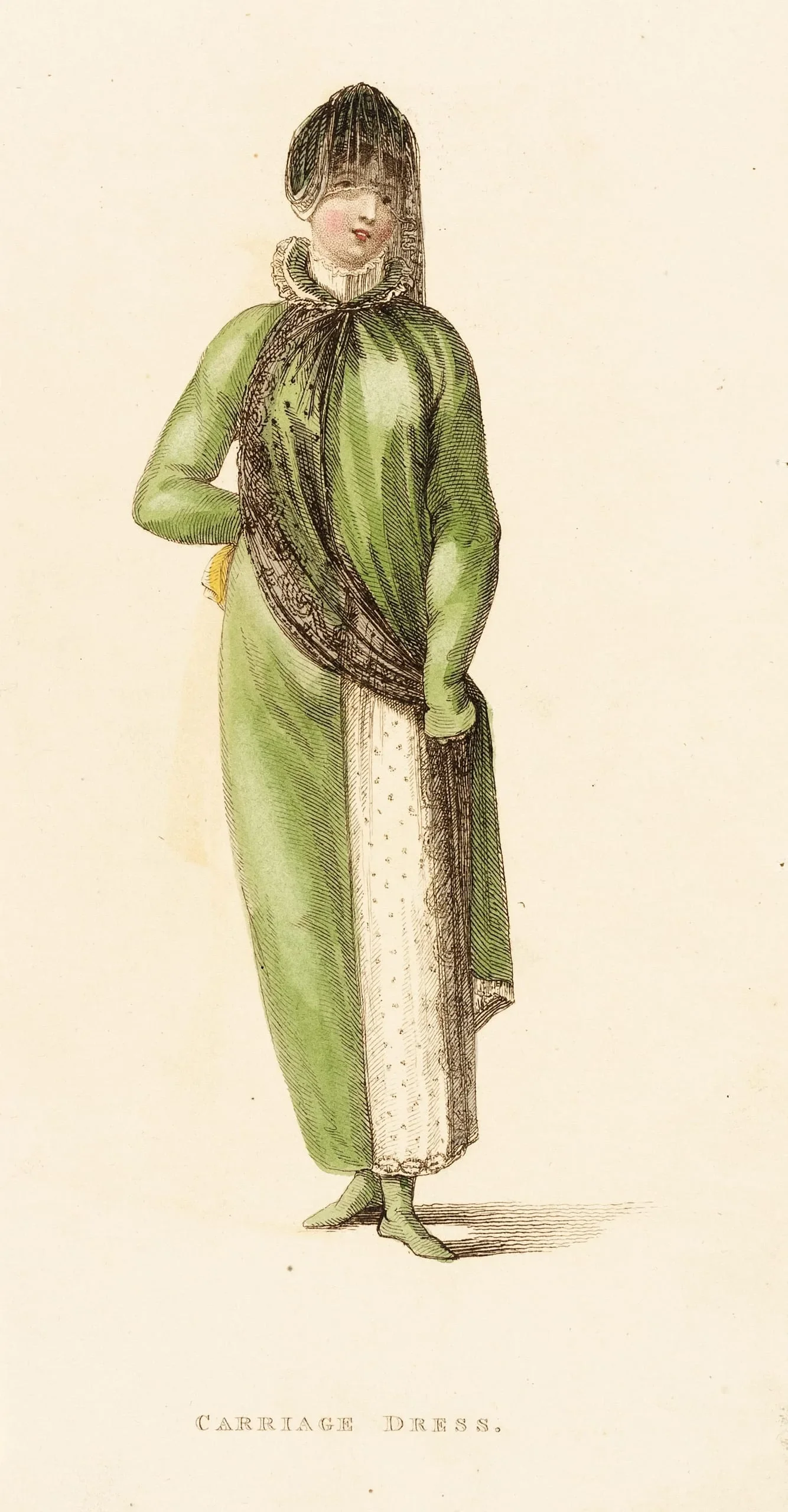
Her high-waisted white dress, short gathered sleeves, low neckline, narrow dark sash, large shawl and arrangement of curls held by a bandeau are consistent with fashionable British dress during the first decade of the nineteenth century and into the early 1810s.
Comparison with contemporary fashion and securely dated portraits suggests a working range of approximately 1805–1812.
For that reason, c. 1810 has been retained as the catalogue date—not as a claim that the portrait was painted during the calendar year 1810, but as an acknowledgment of the period to which the sitter's appearance most plausibly belongs.
THE QUESTION OF THE ARTIST
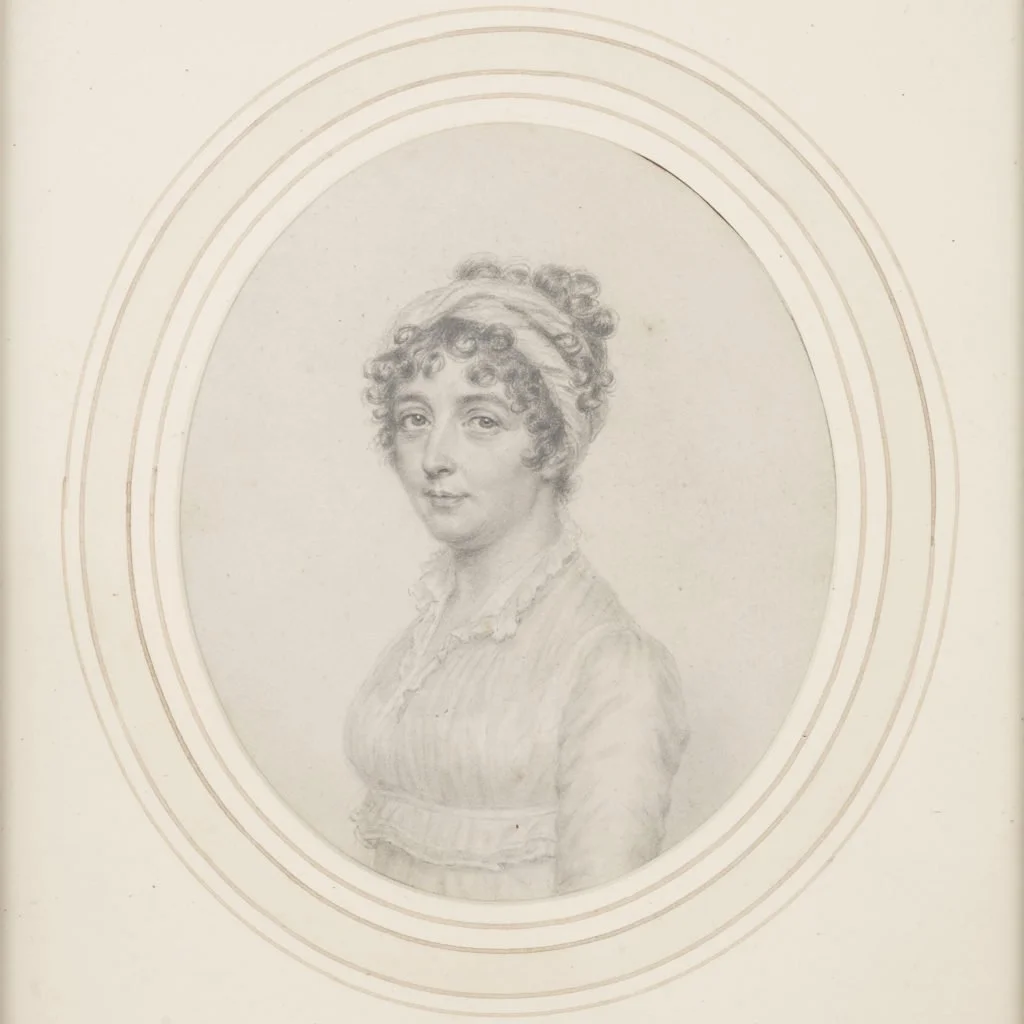
The portrait was initially considered in relation to the work of George Engleheart (1750–1829), one of Britain's leading portrait miniaturists.
There were good reasons for the comparison. Engleheart produced exceptionally delicate portraits in watercolor, and surviving works demonstrate that he was not confined exclusively to the tiny ivory format most commonly associated with portrait miniatures.
But comparison with the work of another important British miniaturist produced an intriguing alternative.
John Smart (1741–1811) developed a particularly precise style of portraiture characterized by carefully modeled faces, finely articulated eyes and hair, restrained expressions and exceptionally controlled stippling and brushwork.
John Smart
Francis Chambers, née Wilton
ca. - 1809

George Engleheart
A lady called Miss or Mrs. Burgoyne
ca. - 1805
Several securely attributed portraits by Smart show notable similarities to this young woman: the proportions and construction of the face, the long neck, small mouth, large dark eyes, individually articulated curls and the placement of the figure within an oval composition.
There is another, less obvious similarity.
Smart sometimes placed his sitters against atmospheric skies rather than the plain neutral backgrounds commonly associated with portrait miniatures. Documented examples include clouded gray and blue-gray skies.
In this portrait, the background appears similarly intentional. Dark gray clouds gather behind the sitter before opening into areas of distinctly blue sky.
What at first seemed an unusual feature may therefore be an important clue.
THE SMART CIRCLE
Attributions become more complicated because John Smart was not working in isolation.
His son, John Smart Junior (1776–1809), trained under his father and became a miniature painter in his own right. The younger Smart worked within much the same visual tradition, and surviving portraits demonstrate how closely an artist directly connected with John Smart could follow the elder painter's methods.
Their careers also overlap the period suggested independently by the sitter's clothing.
John Smart Jr. remained active until his death in India in 1809. His father continued working until his death in London in 1811.
None of this establishes that either man painted this portrait.
There is no known signature, documentary provenance or other evidence that would justify assigning it directly to John Smart. And the surviving body of securely attributed work by his son is too limited to support an attribution to John Smart Jr.
For the present, “Circle of John Smart” offers a more cautious description. It places the portrait within the artistic world most closely reflected by the evidence while stopping deliberately short of claiming Smart's own hand.
The attribution remains open to further research.
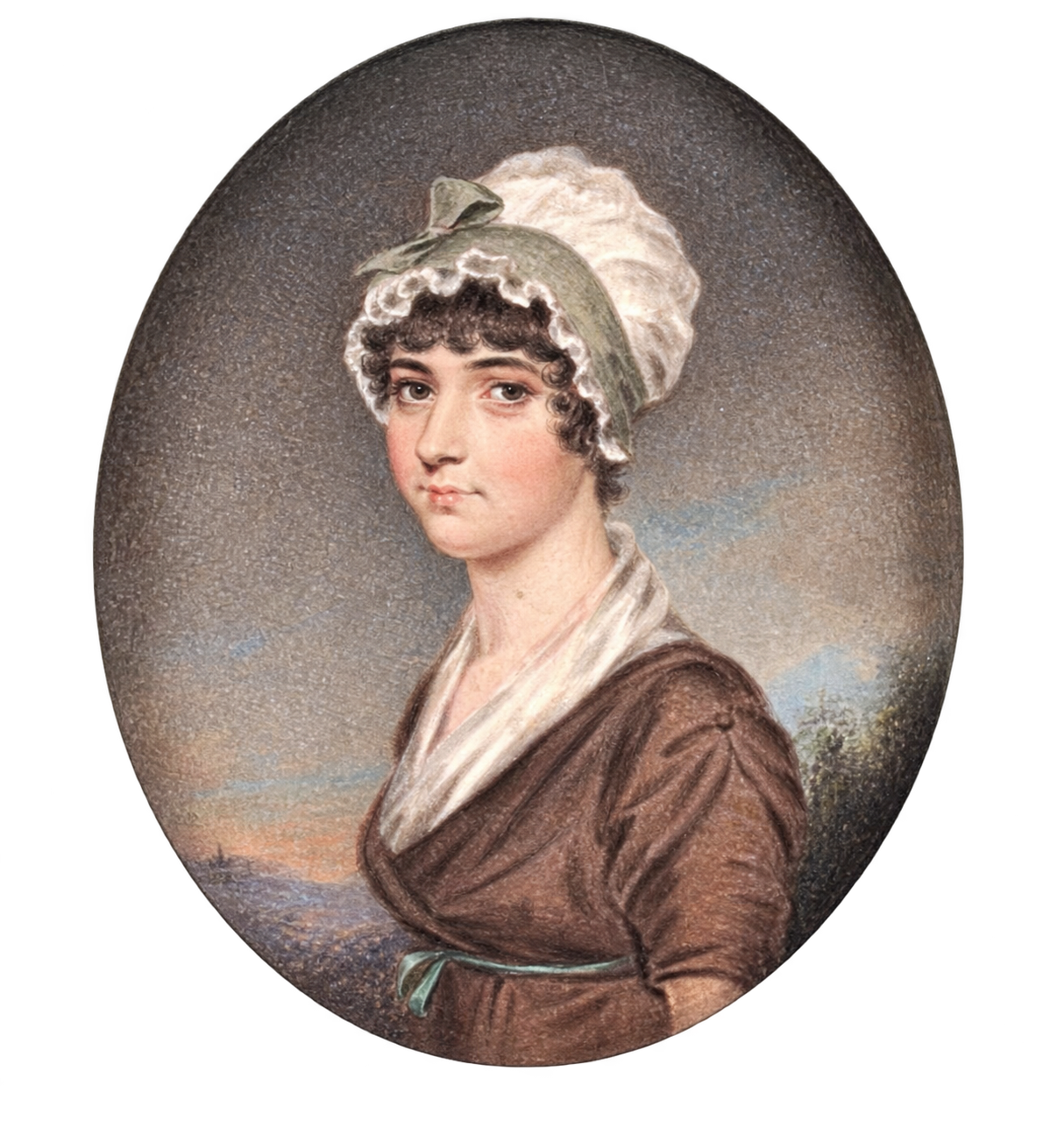
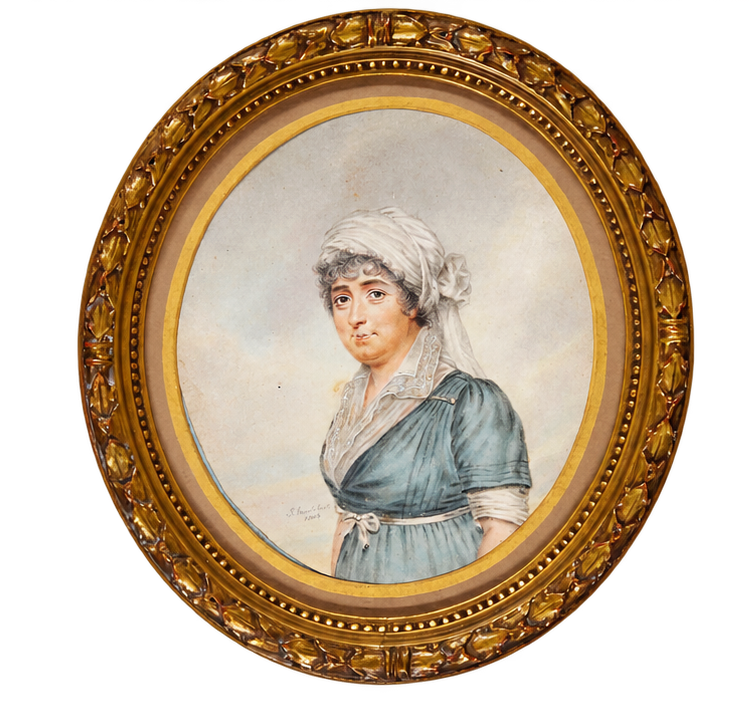
John Smart Junior
Portrait of the Hon. Mrs. Walpole
Signed and Dated - 1803
John Smart Junior
A drawing of a Young Lady in brown dress, with white fichu and white bonnet with green ribbon
Unsigned - c. 1805
AN UNUSUAL SUPPORT
The physical construction of the portrait presents another puzzle.
British portrait miniatures of this period are most famously associated with watercolor painted on thin sheets of ivory. Artists also worked on paper, card and other materials, particularly when producing portraits larger than the conventional miniature format.
This portrait is neither ivory nor vellum.
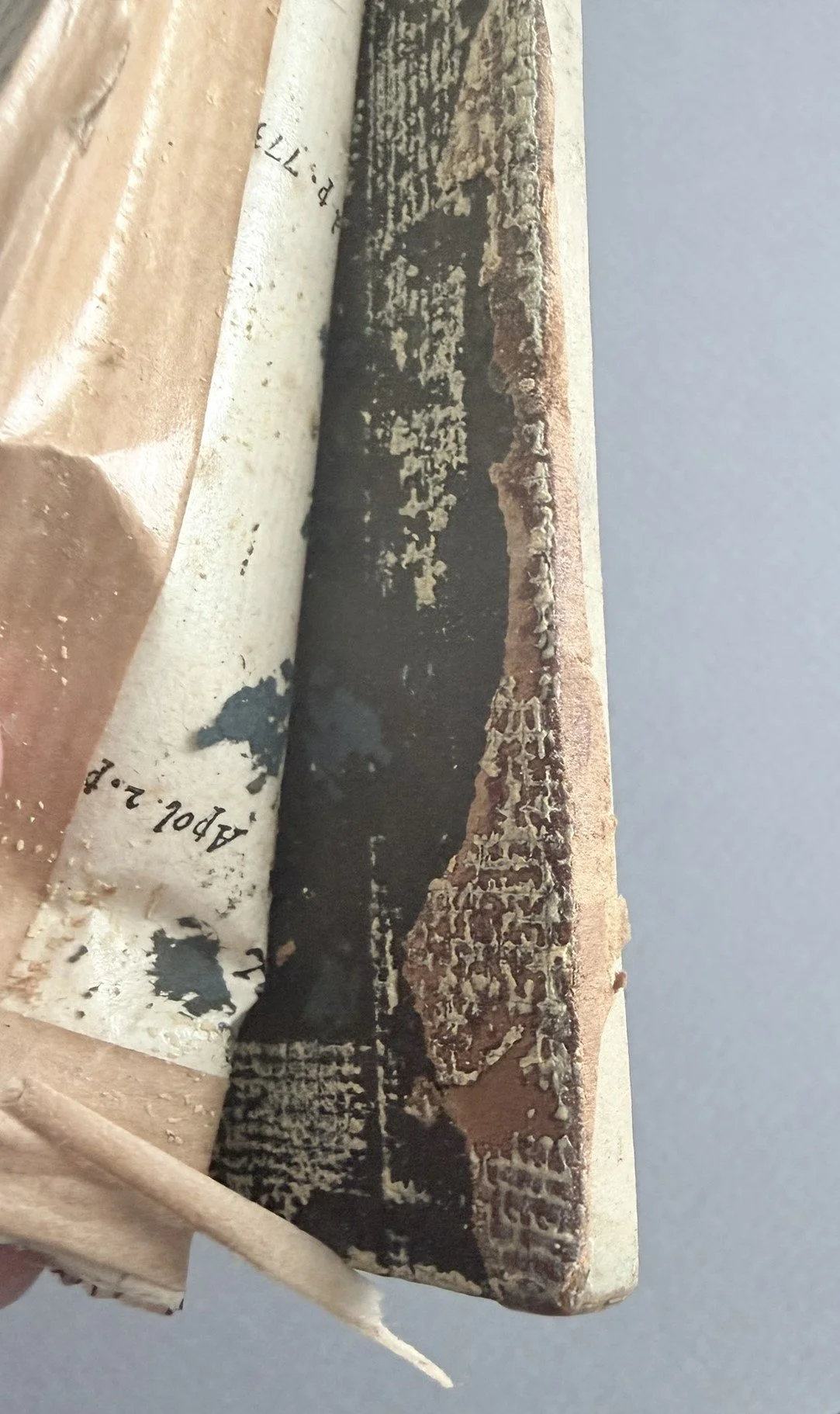
Its support is approximately 6.1 mm thick, completely rigid and very lightweight. The edges are unusually crisp and square, with no visible laminations. The panel has developed a slight bow, while its exposed surfaces have the tactile character of a fine-grained lightweight wood beneath a hard, smooth preparation.
The pale preparation appears to continue from the face around the edges and beneath remnants of what may be early black backing paper.
Much of the reverse of the panel remains concealed beneath book paper and paper tape introduced during a later reframing. Removing those materials solely to identify the underlying support would unnecessarily disturb part of the object's history.
A prepared wooden panel—possibly a lightweight, close-grained species such as poplar—remains the leading possibility, but the wood species has not been identified.
For now, the support remains another unanswered question.
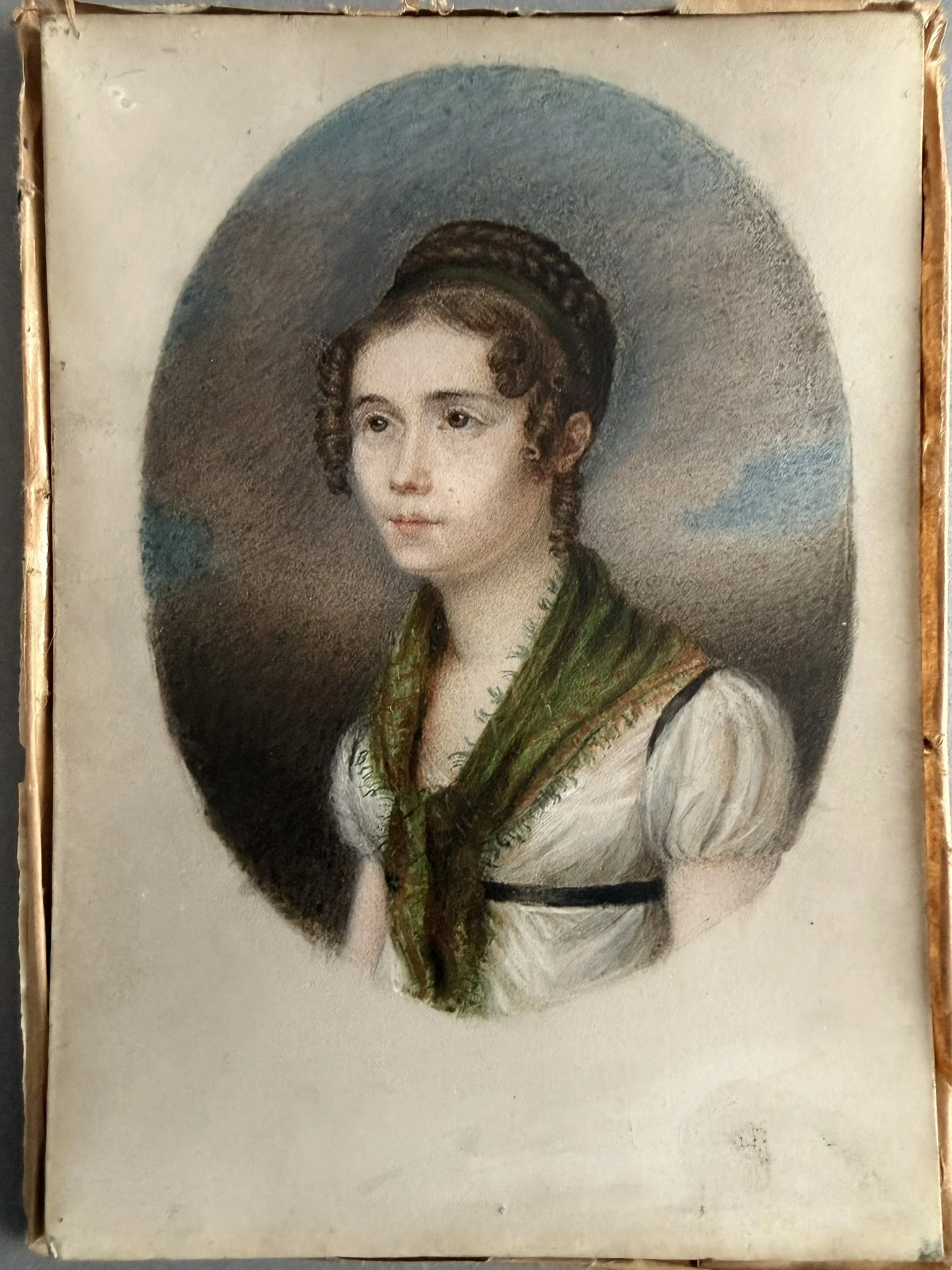
Front of the prepared panel
Portrait exposed from its later framing
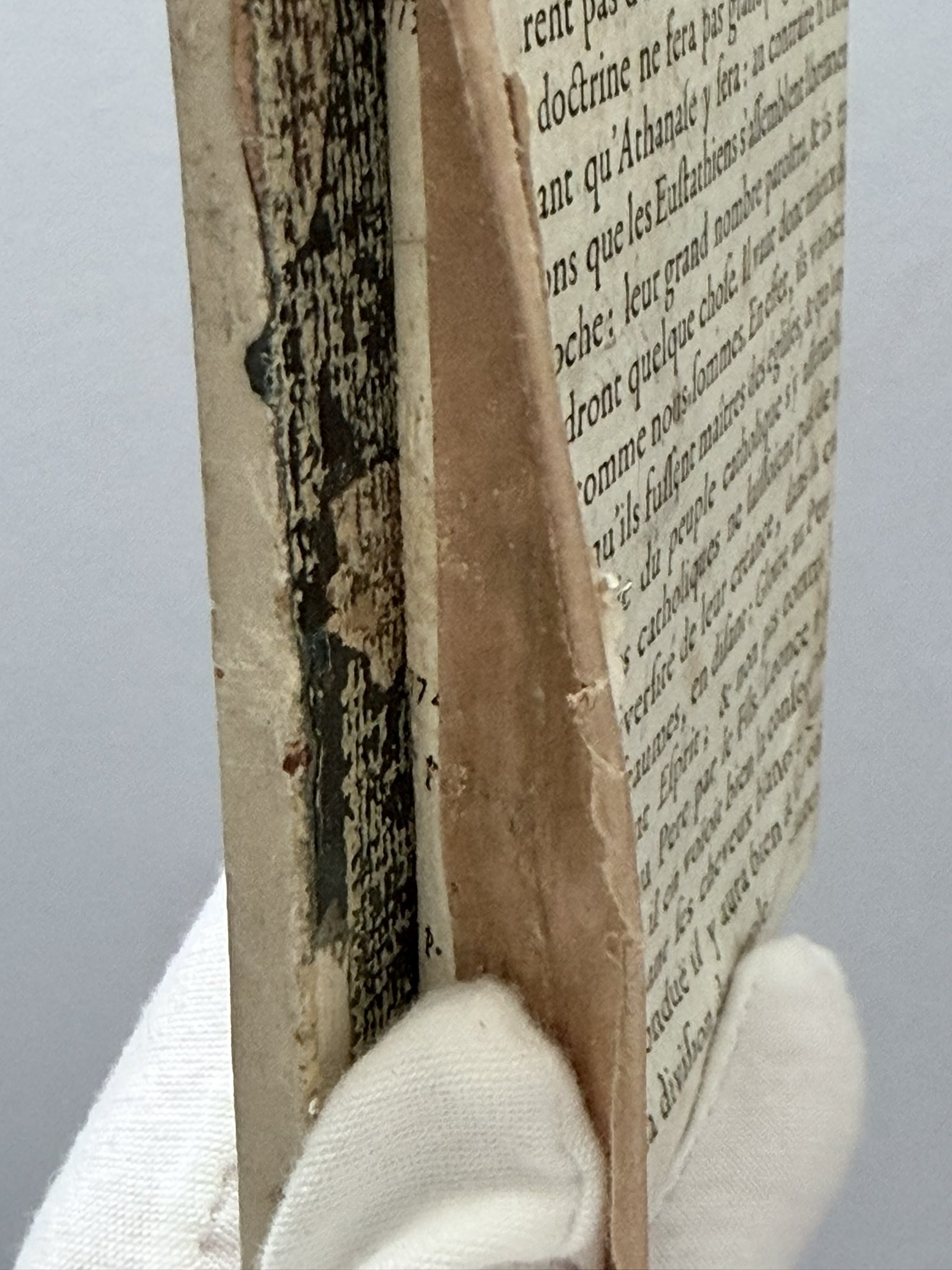
Exposed edge and reverse
Showing the rigid support and surviving backing layers
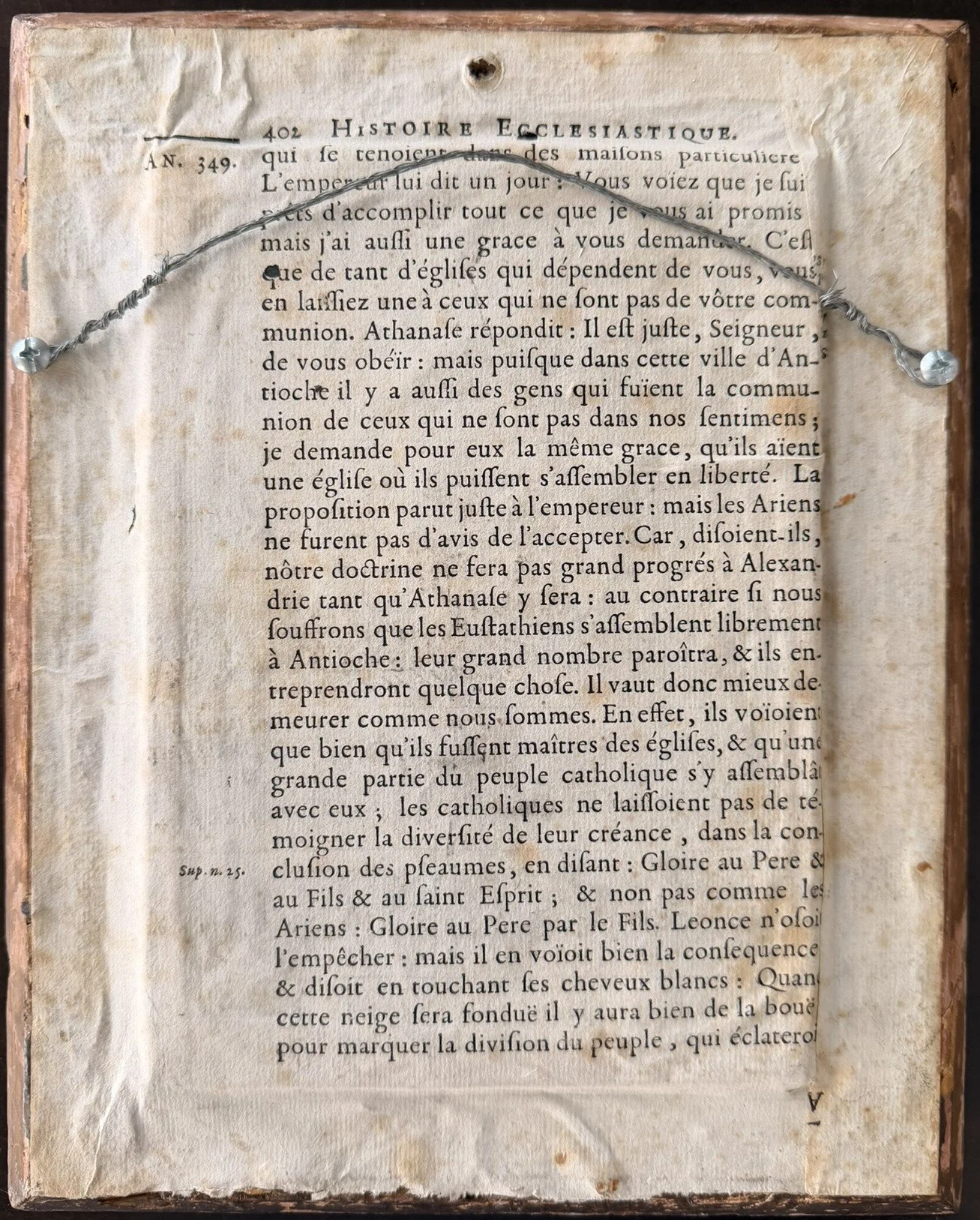
Reverse as received
French book paper covering the panel
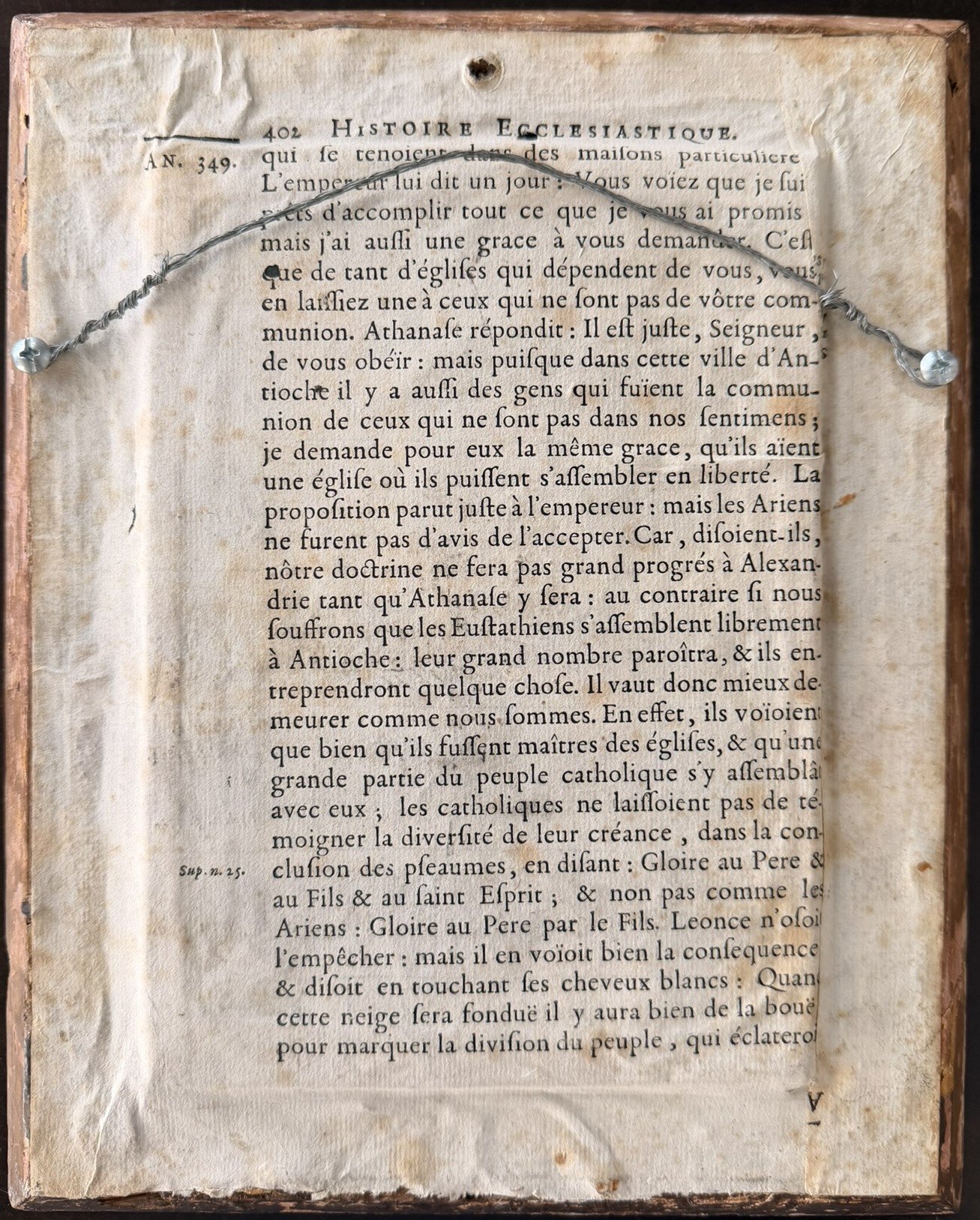
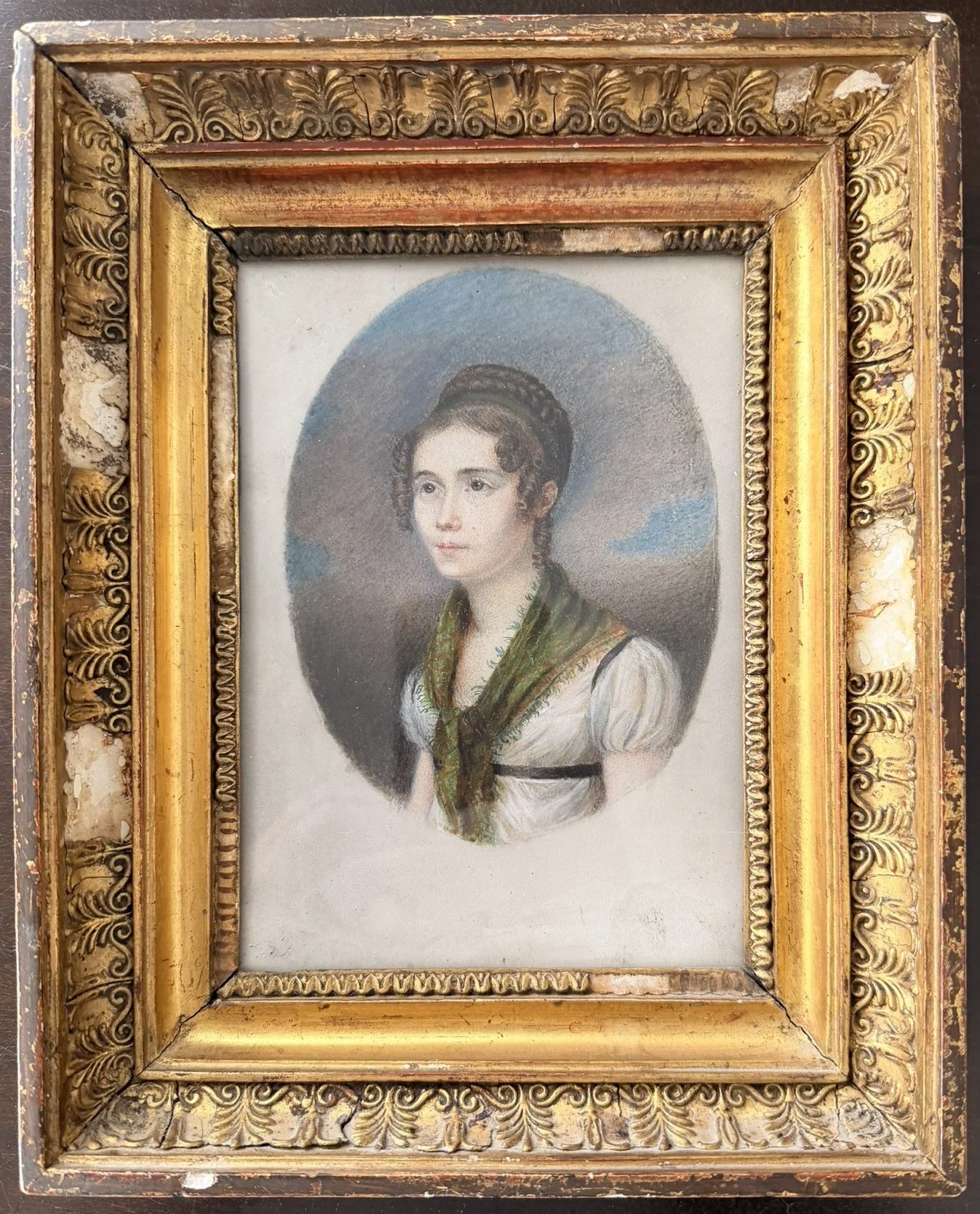
The portrait arrived in an old gilt frame, protected behind glass and backed with a printed page taken from a French book.
The frame itself appears to be later than the portrait. At some point in the object's history, the rectangular painted panel was fitted into it and secured behind the oval opening, concealing much of the support from view.
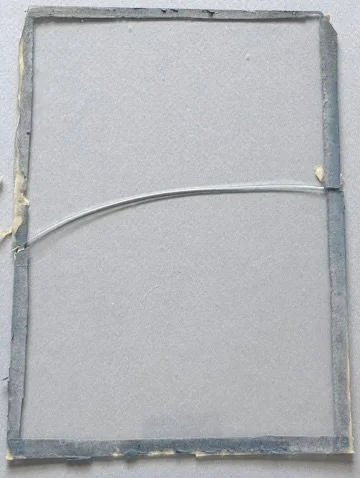
The French book page belongs to this later framing rather than to the original construction of the portrait. It was applied across the reverse as a backing, with additional paper and tape used around the edges.
When the portrait was removed from the frame for examination, the later backing revealed something unexpected. Beneath it survive remnants of an earlier dark paper adhered directly to portions of the panel, suggesting that the portrait had already undergone at least one previous mounting or framing campaign.
These successive layers have become part of the object's physical history. Although removing the remaining paper might reveal more of the underlying support, doing so solely in the hope of identifying the panel would sacrifice surviving evidence for information that might ultimately prove inconclusive.
The original glass was damaged while the tightly fitted portrait was being removed from the frame for examination. It has since been replaced with conservation-grade UV-filtering glass.
The frame cannot tell us who painted the portrait or who the young woman was. Nor can we know when the portrait first entered it, or what earlier frames may have preceded it.
What survives instead is evidence of a much longer history of ownership and care: different materials, different hands and different attempts to protect a portrait whose original identity had already been lost.
Long after those names had been forgotten, someone still considered her worth framing—and worth keeping.
THE FRAME AND ITS HISTORY
CONSERVING THE FRAME
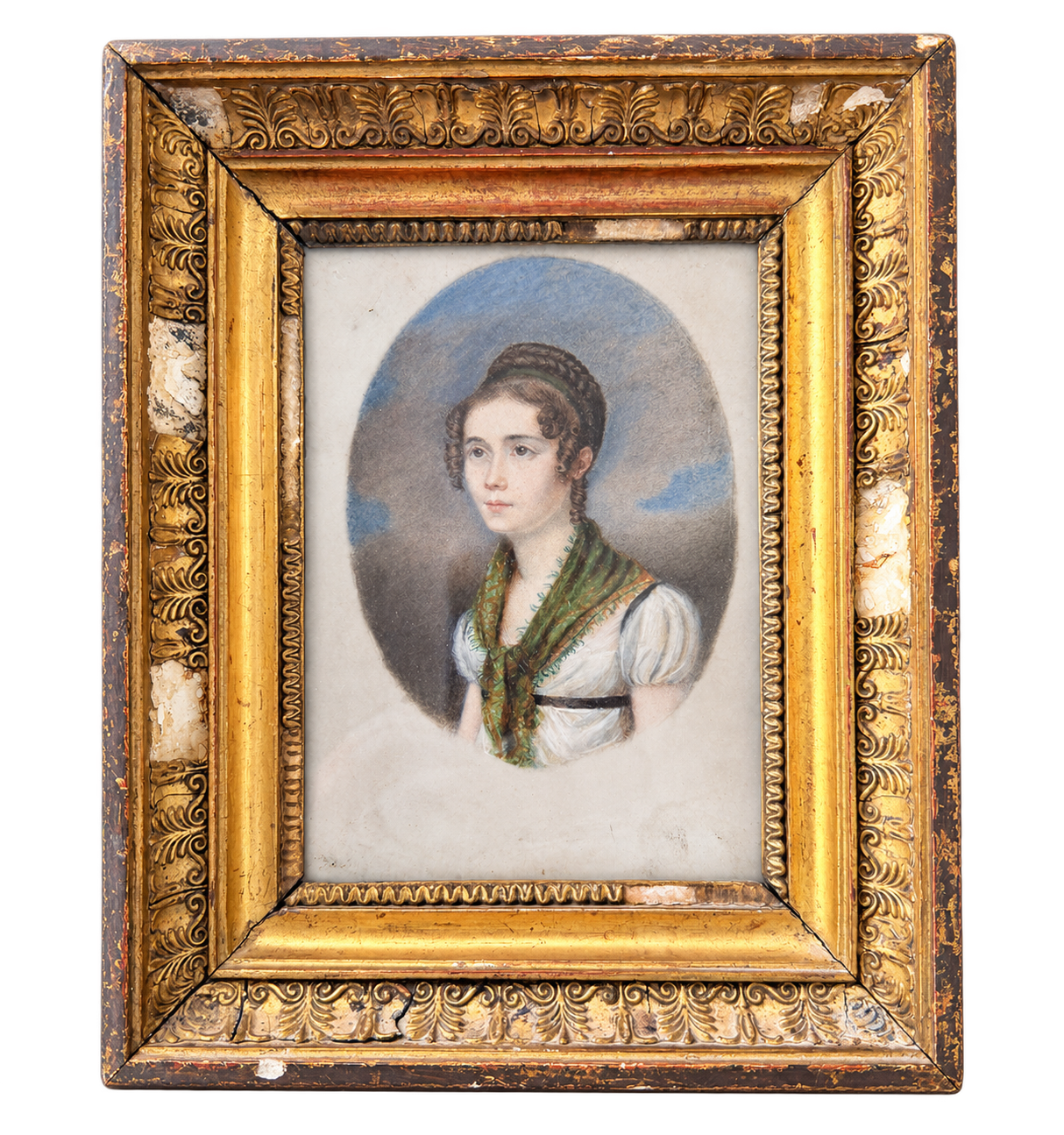
The conservation of the frame was deliberately limited. The intention was not to restore it to an imagined original condition, but to stabilize what survived and replace only those portions of the molded ornament that had been lost.
After cleaning, surviving ornament was used to create silicone molds from which replacement sections were cast in plaster. Each casting was individually cut, sanded and fitted before being attached with reversible animal hide glue.
The new ornament was then toned and gilded to integrate it with the existing surface without disguising the frame’s age. Wear, irregularities and surviving original finish were intentionally retained.
Finally, the portrait was returned to the conserved frame with a newly cut archival mat and conservation-grade UV-filtering glass.
The result is not a new frame, but a more complete and stable version of the one that survived.
WHAT REMAINS
Her name is unknown. The identity of the artist remains uncertain. Even the material on which she was painted still leaves questions.
What survives is the portrait itself: a young woman painted more than two centuries ago, preserved through successive owners, changes of frame and generations in which the names attached to her were gradually lost.
Research into the portrait will continue. Should new evidence emerge about the sitter, the artist or the circumstances in which it was painted, this record will be updated.
For now, only her portrait remains.
For more information, watch the video

RESEARCH NOTE
The identification of both the sitter and the artist remains unresolved. The attribution to the Circle of John Smart is a working attribution based on visual comparison, period evidence and the physical characteristics of the portrait; it should not be understood as an attribution to Smart himself.
The dating of the portrait to ca. 1810 is similarly intended as an approximate assessment based principally on the sitter's dress, hairstyle and the broader context of British portraiture of the period.
What We Keep favors documented works, museum collections and identifiable period sources wherever possible. Where the evidence remains inconclusive, uncertainty is retained rather than resolved through assumption.
Research into the portrait is ongoing. This record may be revised should further evidence concerning the sitter, artist, support or history of the portrait emerge.
SOURCES & FURTHER READING
National Portrait Gallery — John Smart
Biographical and collection information for John Smart (1741–1811), including documented works and career history.
National Portrait Gallery: John Smart
Victoria and Albert Museum — Portrait Miniatures
Overview of the British portrait-miniature tradition, including materials, techniques, ivory supports and the development of the form.
V&A: Portrait Miniatures
Nelson-Atkins Museum of Art — John Smart Junior
Research on John Smart Junior (1776–1809) and surviving examples of his portrait miniatures, including discussion of his relationship to his father’s work.
Nelson-Atkins: John Smart Junior, Portrait of George Babington
Los Angeles County Museum of Art — La Belle Assemblée, 1808
Contemporary British fashion plates used in assessing the sitter’s dress and supporting the working date of ca. 1810.
LACMA: Hyde Park Walking Dresses, 1808
LACMA: Fashionable Spring Walking Dresses, 1808
LACMA: Morning Walking Dresses, 1808
Christie’s — George Engleheart, A Lady Called Miss or Mrs M. Burgoyne
Documented Engleheart miniature used as a stylistic and period comparison for the portrait.
Christie’s: George Engleheart, Miss or Mrs M. Burgoyne
National Galleries of Scotland — John Smart
Biographical overview of Smart’s training, draughtsmanship, miniature practice and career in London and India.
National Galleries of Scotland: John Smart