

Time Travel — The Carriage Clock
There was a time when travelling meant leaving behind nearly every comfort of home. Journeys were measured in days rather than hours, and even knowing the time could be a luxury.
As travel evolved during the eighteenth and nineteenth centuries, so too did the objects people carried with them. Among the most elegant was the carriage clock — a miniature marvel of mechanical ingenuity, designed to bring the reassuring presence of a familiar clock wherever its owner might journey.
In this episode of What We Keep, we explore the fascinating history of these remarkable timepieces and the craftsmen who created them. Along the way, we encounter several antique carriage clocks, including two that had long since fallen silent — and discover that sometimes, with patience and care, time can begin again.
A Clock Made for Travelling
By the late eighteenth century, travel was undergoing a transformation. Improved roads, increasingly sophisticated carriages, and eventually the arrival of the railway made journeys more practical and comfortable for those who could afford them.
Yet travelers still sought to bring something of home along with them. Among the most ingenious solutions was the portable clock.

The Man Who Made It Happen
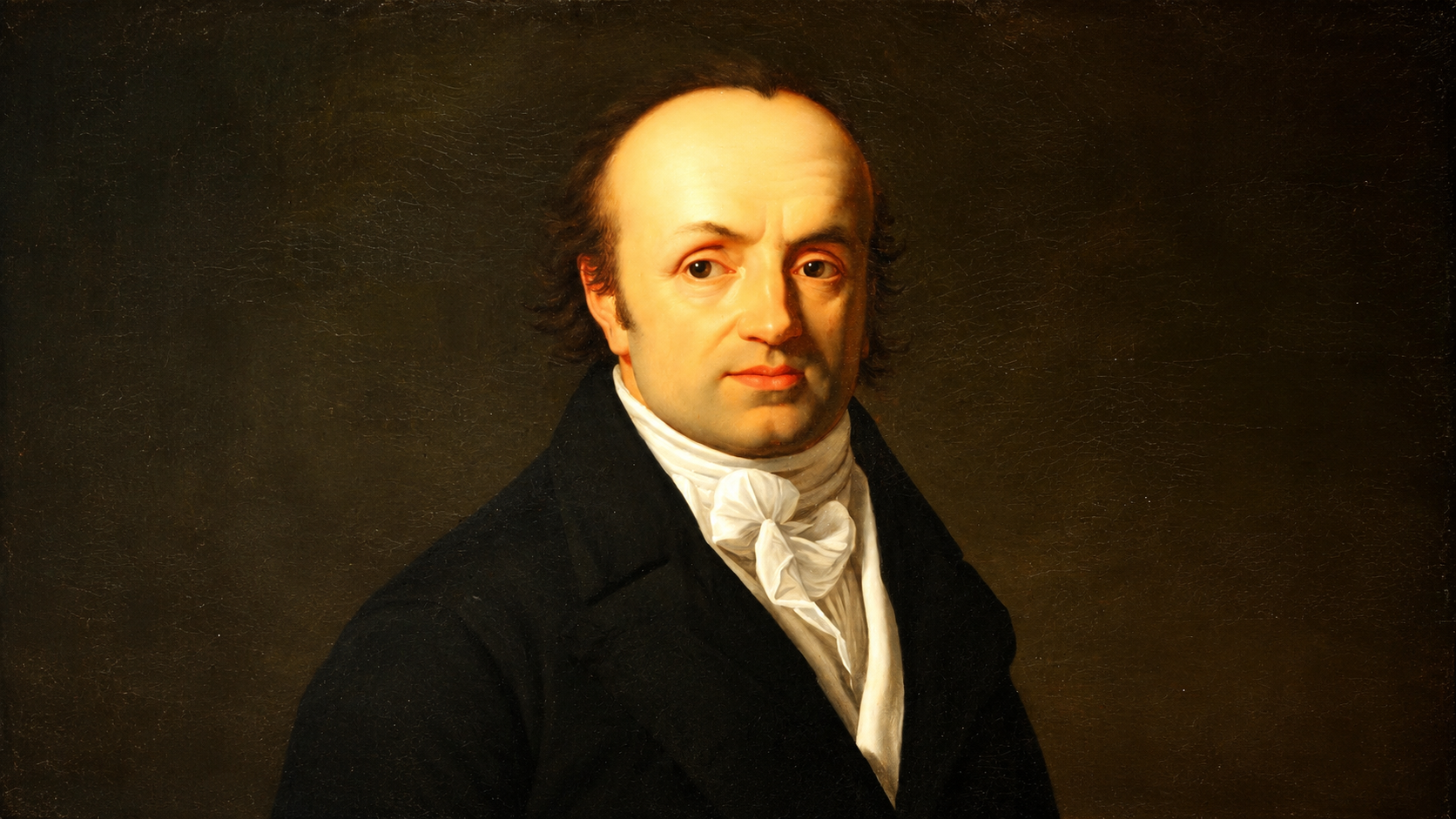
In 1796, the celebrated Swiss-born watchmaker Abraham-Louis Breguet, working in Paris, created an early form of the carriage clock. Renowned for his extraordinary mechanical innovations and exquisite craftsmanship, Breguet was already establishing a reputation among Europe's most distinguished clientele.
In April 1798, a young General Napoleon Bonaparte purchased one of Breguet's remarkable travelling clocks, recorded as No. 178, shortly before embarking on his Egyptian campaign. No. 178 was completed in 1796 and sold to Napoleon on 24 April 1798 for 1,500 francs. It had an eight-day movement, quarter-repeating mechanism, calendar and moon-phase display

Napoleon's purchase provides a fascinating connection between the history of horology and one of the most consequential figures of the age. As armies, diplomats, and aristocratic travelers crossed Europe and beyond, the ability to carry a reliable clock became both a practical convenience and a mark of refinement.
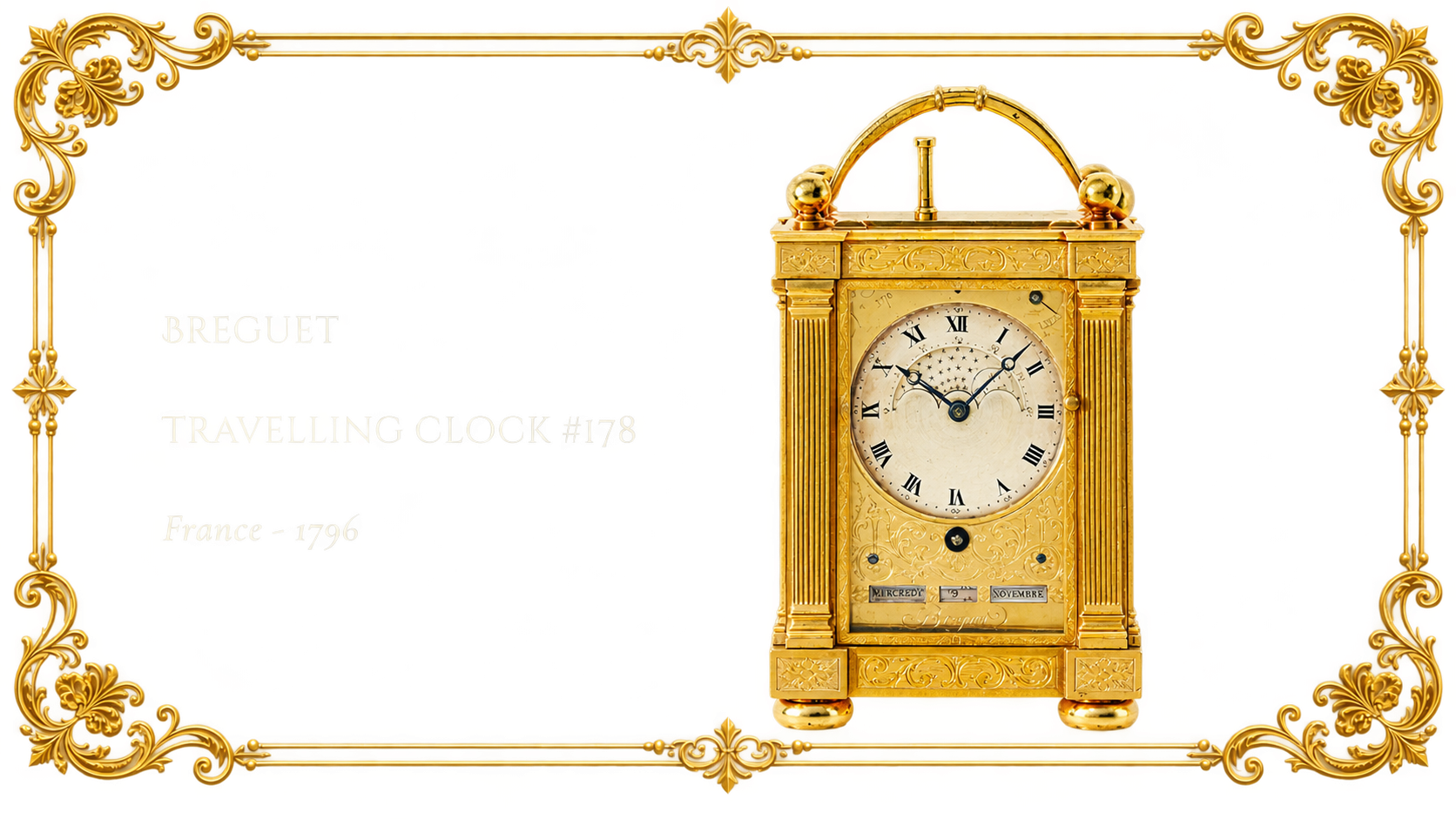
Unlike the familiar rectangular brass-and-glass carriage clocks of the nineteenth century, Breguet's early travelling timepieces were sophisticated instruments designed for portability, precision, and convenience. They reflected a growing desire among wealthy travelers to carry the comforts and refinements of home wherever their journeys might lead.
The carriage clock would continue to evolve throughout the nineteenth century, eventually assuming the recognizable form that remains so admired by collectors today.
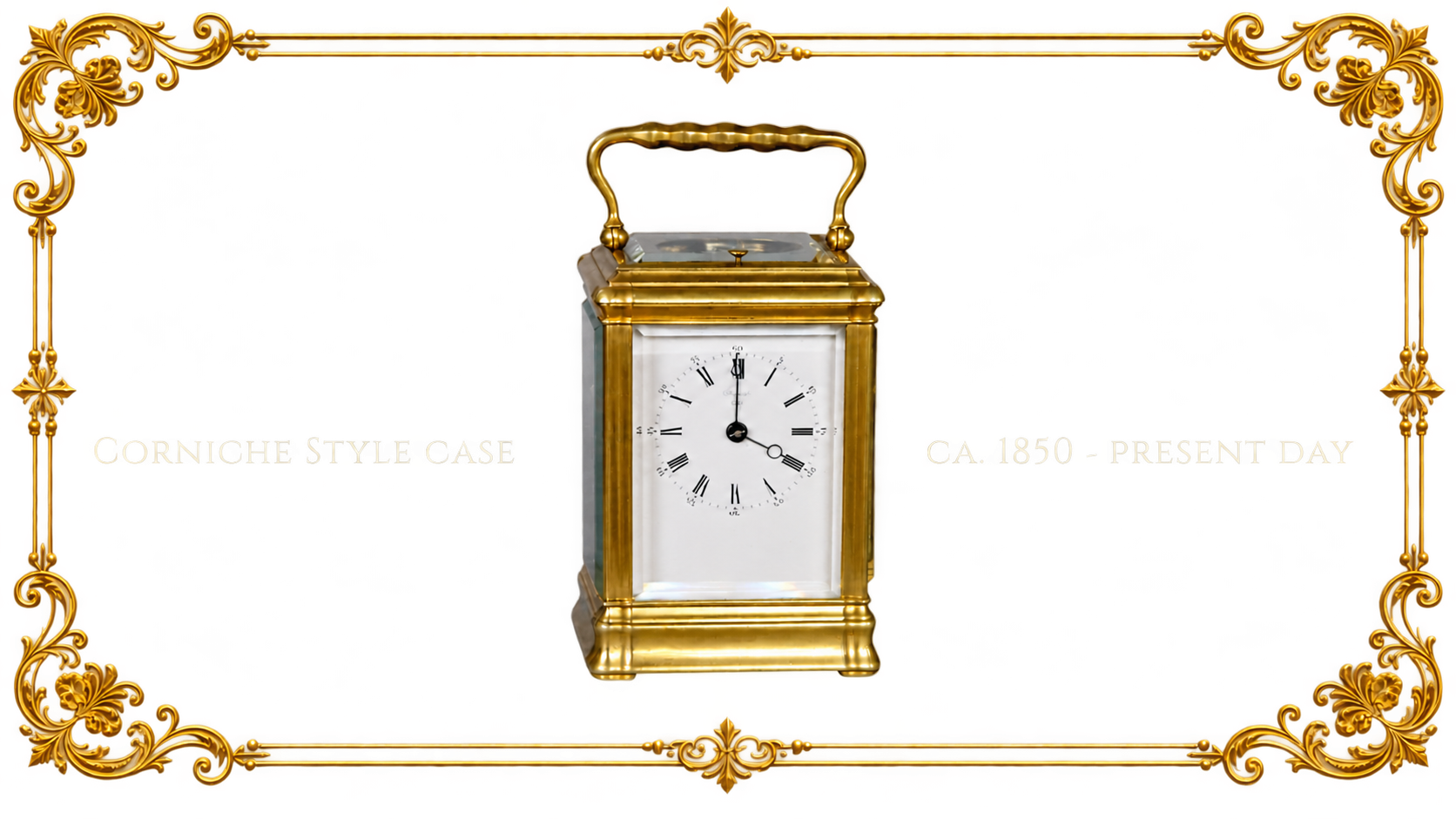
By the middle of the nineteenth century, the Corniche-style case had become one of the most enduring designs in French carriage clockmaking. Characterized by its rectangular brass construction, moulded upper and lower edges, beveled glass panels, and distinctive folding handle, the Corniche case combined elegance with practicality.
The glass panels allowed the intricate movement to be admired from several angles, while the sturdy brass framework protected the delicate mechanism within. Many examples featured eight-day movements, allowing travelers to enjoy a full week of reliable timekeeping between windings.
Although carriage clocks were produced in a remarkable variety of decorative styles, the restrained elegance of the Corniche design proved particularly enduring. More than a century and a half later, its familiar silhouette remains virtually unchanged — a testament to the craftsmanship and ingenuity of the French clockmakers who perfected it.
Moving Time
One of the carriage clock's most ingenious features was its ability to continue keeping time even when tilted or laid on its side.
Unlike traditional pendulum clocks, which depend upon gravity and a stable, upright position, carriage clocks typically employ a balance wheel and hairspring to regulate their movements. This arrangement allows the clock to operate in different orientations, making it particularly well suited to travel.
A carriage clock could therefore continue ticking as it was carried, packed in luggage, or placed aboard a moving carriage or railway train. Although changes in position and the vibrations of travel could affect its accuracy, the mechanism was not dependent upon remaining perfectly upright.
It was this combination of portability, mechanical ingenuity, and elegant design that made the carriage clock such a remarkable achievement of nineteenth-century horology.
The Clocks in Our Collection
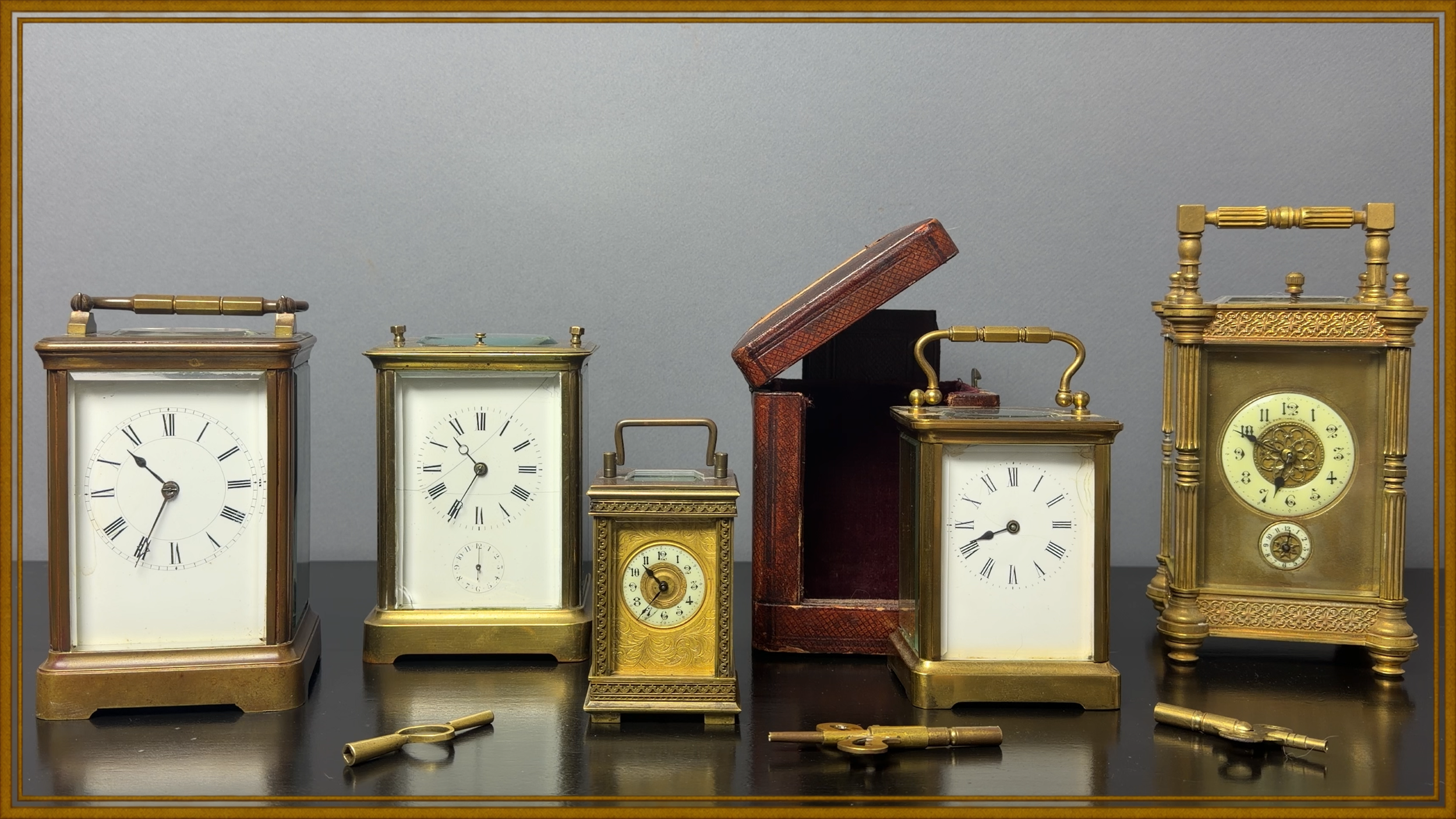
Every antique clock has a history, though much of it is inevitably lost with the passage of time. The names of their original owners, the journeys they accompanied, and the rooms in which they once stood are often mysteries that can never be fully resolved.
Yet the clocks themselves retain evidence of their origins. A maker's mark concealed within a movement, a retailer's name printed upon a dial, or the distinctive construction of a brass case can offer tantalizing glimpses into their past.
The carriage clocks featured in this episode were acquired in varying states of preservation. Some continued to keep remarkably accurate time, while others had fallen silent, their delicate mechanisms awaiting attention.
Among them are two particularly interesting examples, bearing connections to the French clockmaking traditions of Jacot and Henri Acier. Their stories demonstrate both the extraordinary durability of nineteenth-century craftsmanship and the importance of preserving these remarkable instruments for future generations.
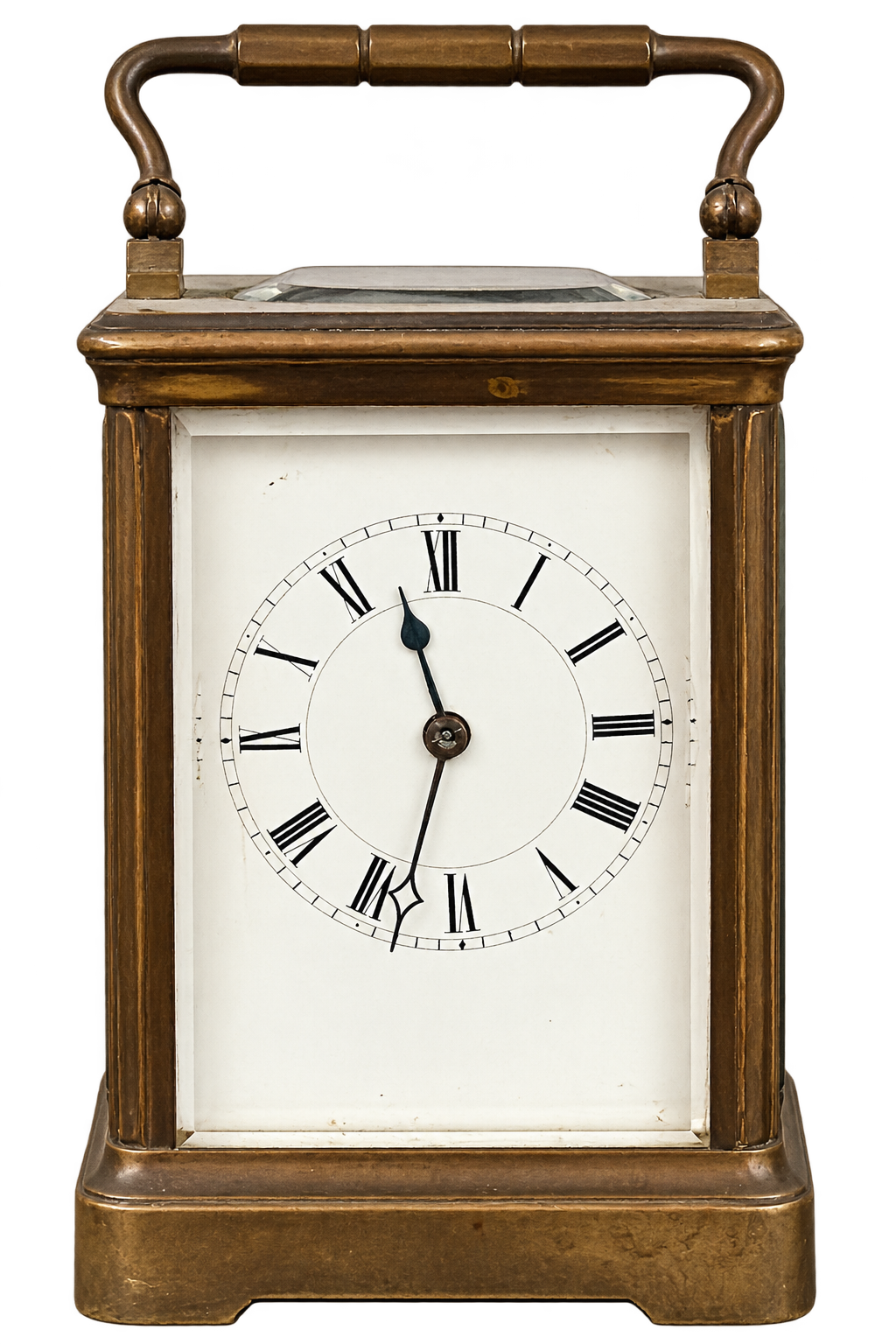
H. Jacot Carriage Clock
France · Late 19th Century
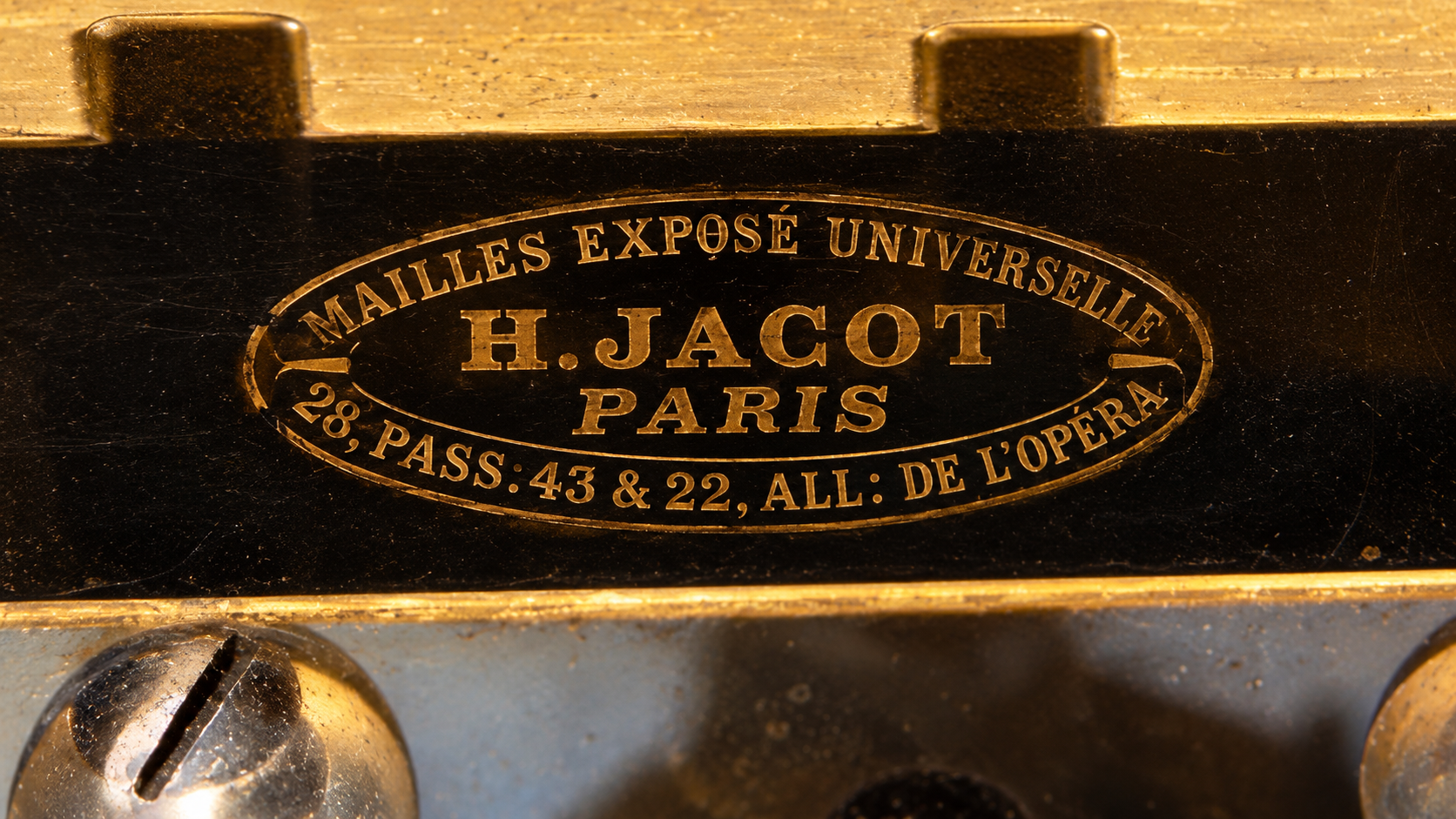
H. Jacot, Paris — Maker’s stamp concealed behind the dial.
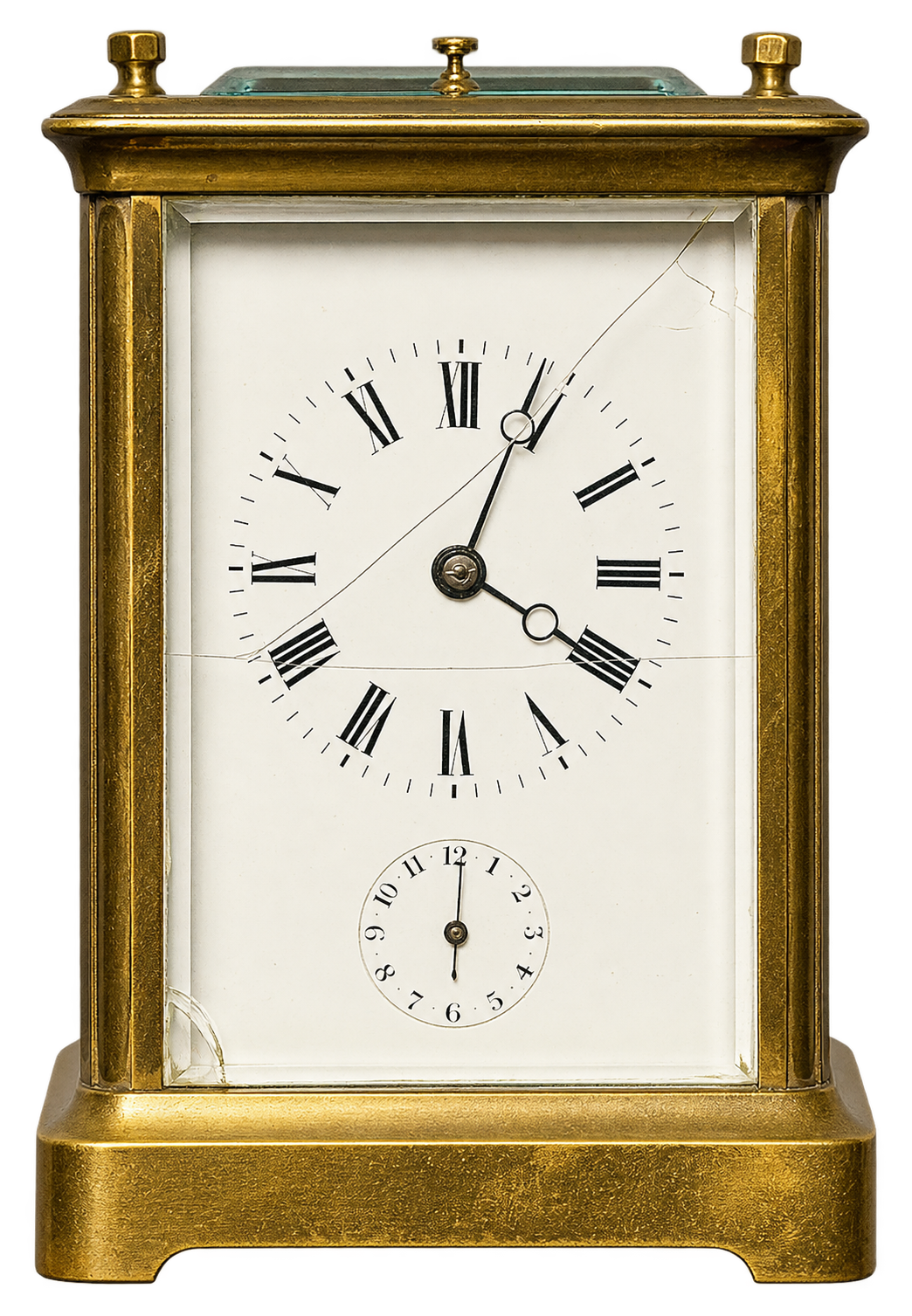
Henri Acier Carriage Clock with Alarm
France · Late 19th Century
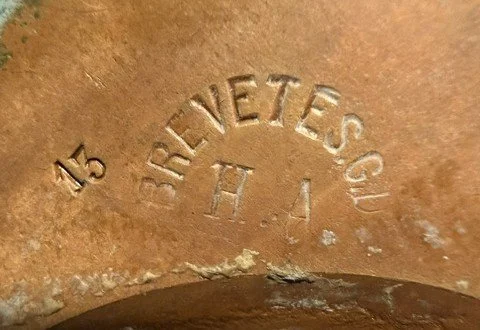
Henri Acier — H.A. maker’s mark stamped beneath the clock’s top plate.
When these two nineteenth-century carriage clocks entered the collection, neither was running. Their brass cases bore the evidence of decades of handling, accumulated grime, and previous attempts at cleaning. Beneath their glass panels, however, lay remarkably intricate mechanisms, constructed by craftsmen whose work had already survived well over a century.
The Jacot clock, acquired for just $79, was particularly intriguing. Its maker's stamp, concealed behind the dial, offered a connection to the distinguished tradition of French clockmaking. Despite its age and uncertain maintenance history, the movement showed encouraging signs of life.
Time Will Tell
The Jacot clock, acquired for just $79, was particularly intriguing. Its maker's stamp, concealed behind the dial, offered a connection to the distinguished tradition of French clockmaking. Despite its age and uncertain maintenance history, the movement showed encouraging signs of life.
The Henri Acier clock presented a different challenge. Its alarm mechanism had been deliberately immobilized with a piece of wire, while the movement itself initially refused to run continuously. Further examination revealed accumulated residue from earlier brass polishing, along with a mechanical adjustment that required exceptional care.
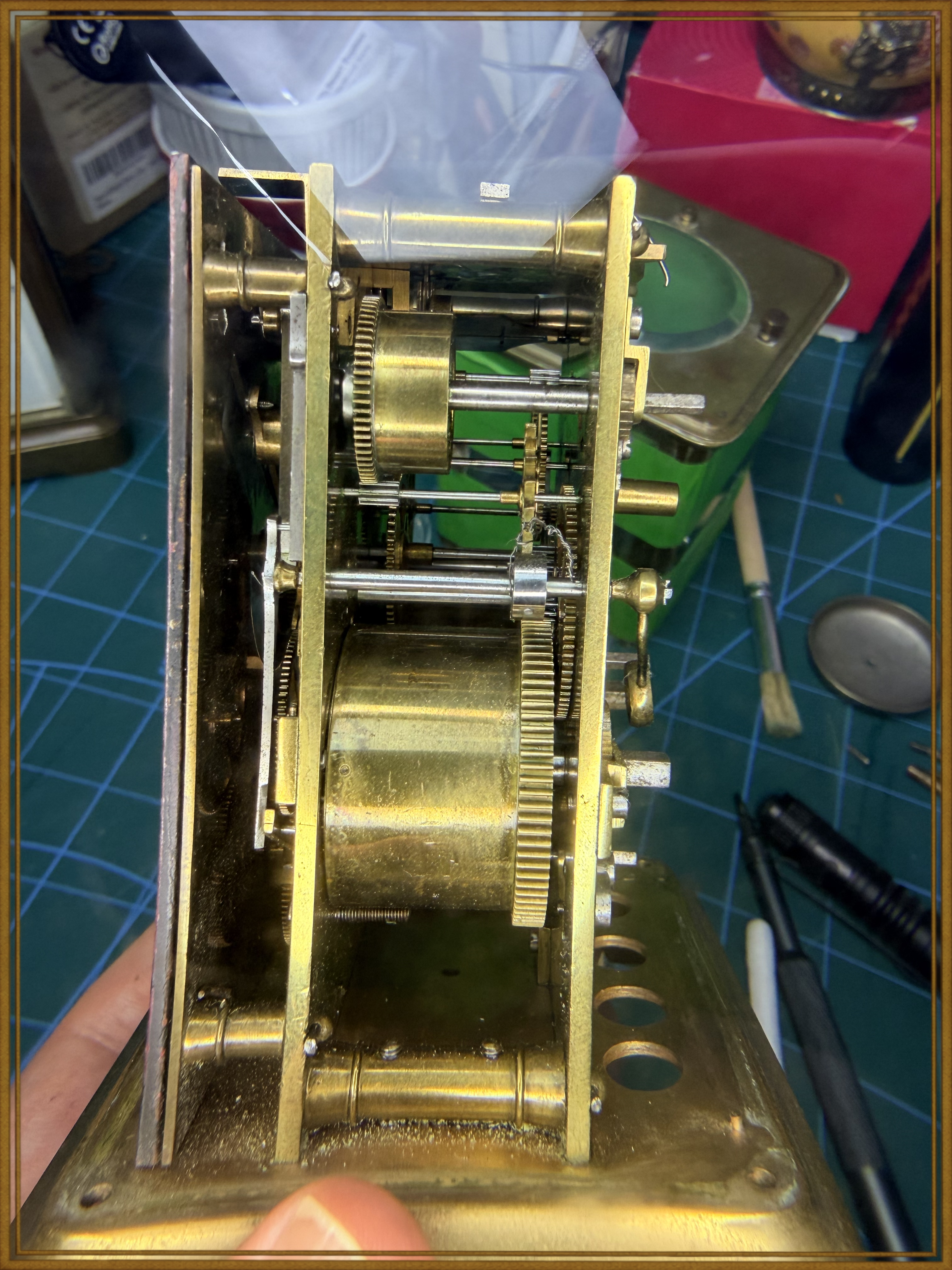
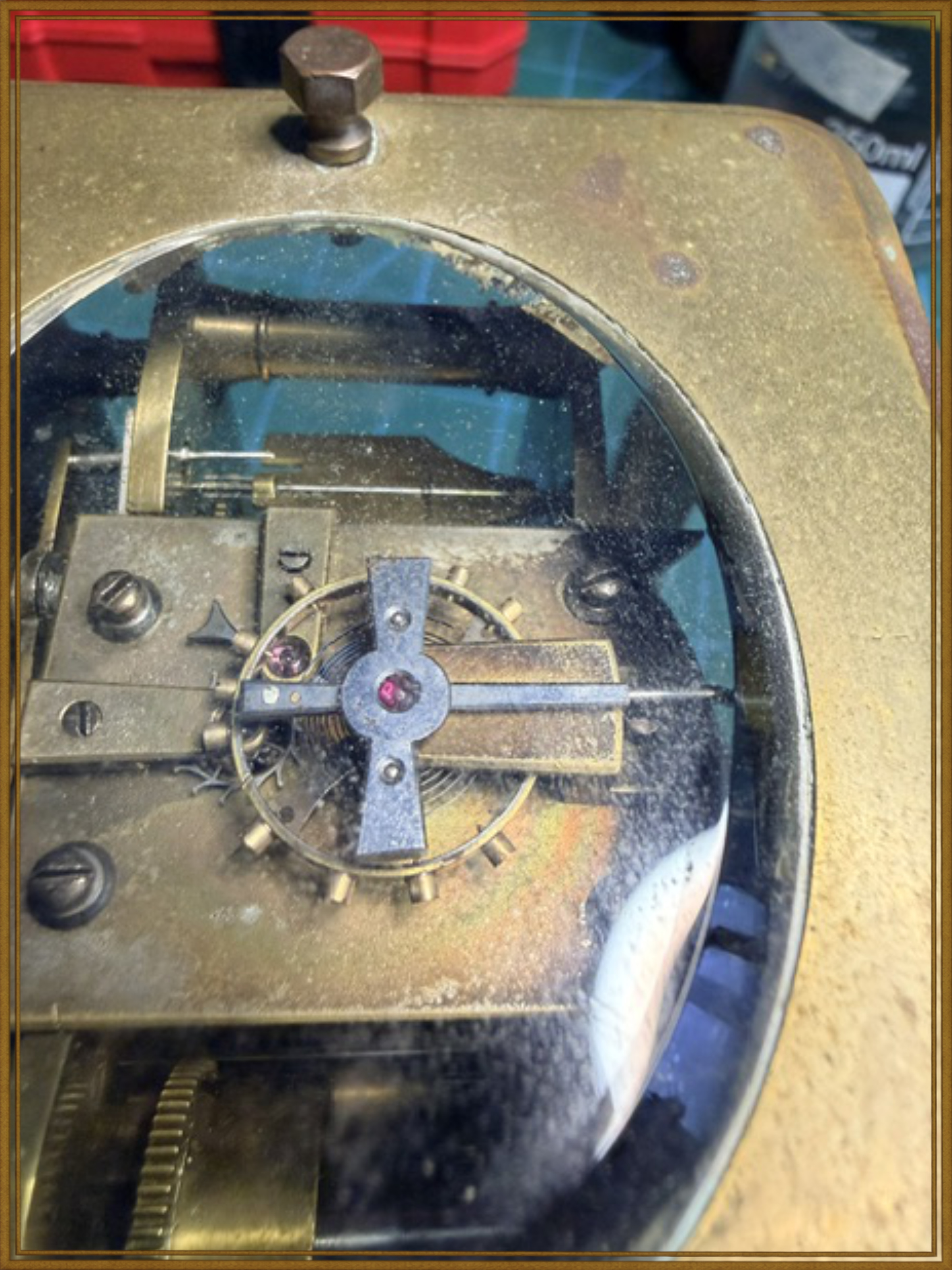
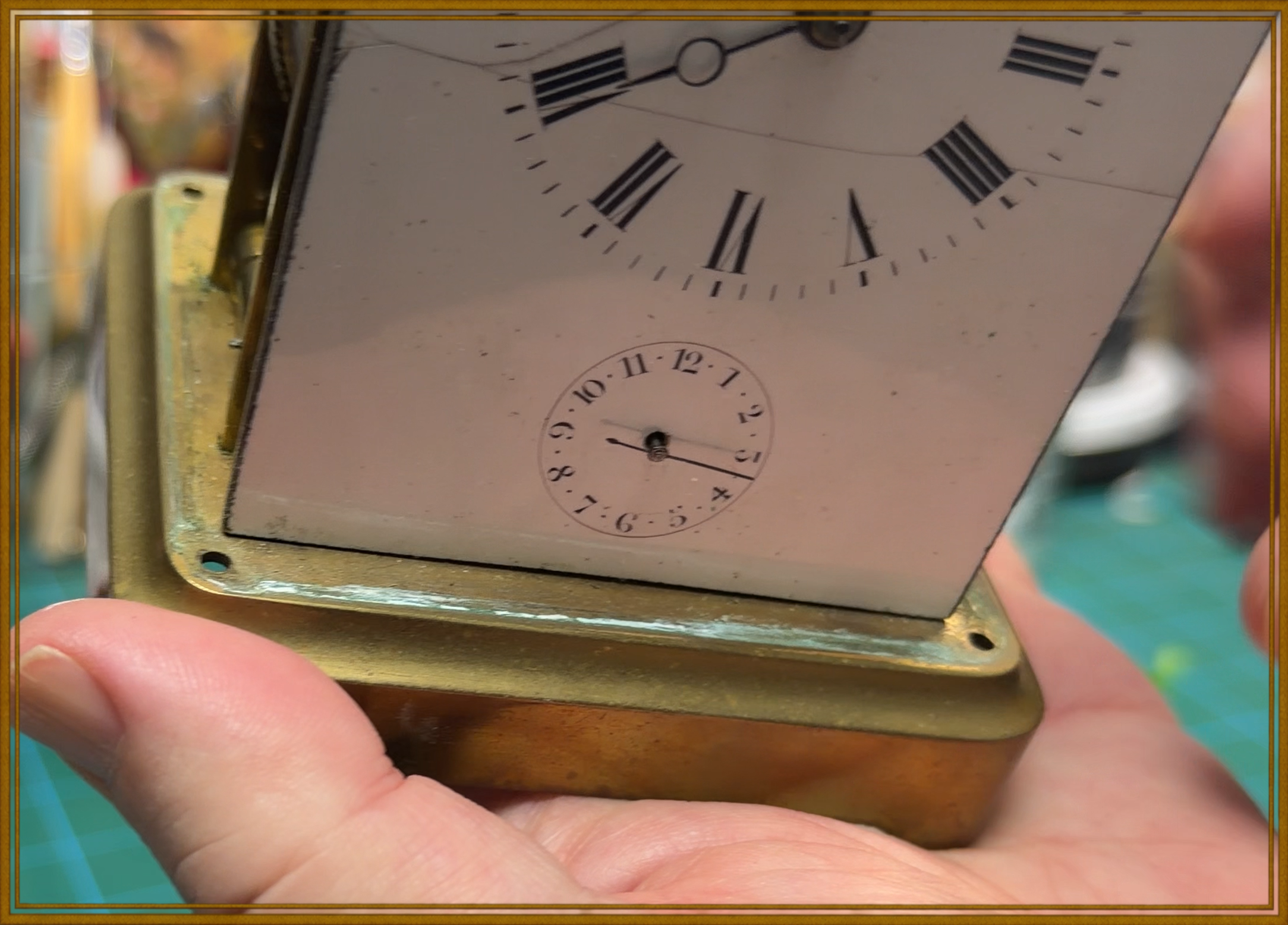
The Henri Acier carriage clock during examination and careful maintenance, revealing its intricate movement, balance assembly, and the effects of earlier cleaning.
The two carriage clocks presented very different stories. The Jacot, despite its age and evidence of earlier handling, was already running when filming began. Its movement continued to demonstrate the remarkable durability of nineteenth-century French clockmaking.
The Henri Acier, however, had fallen silent. Its alarm mechanism had been deliberately immobilized with a piece of wire, and its movement initially refused to run continuously. Years of accumulated residue from earlier brass polishing had also found their way into the case.
Careful examination, limited cleaning, and a particularly delicate mechanical adjustment eventually brought the movement back to life. What had initially seemed destined to remain a decorative relic was once again keeping time.
The objective was never to make these clocks appear new. Their worn surfaces, aged brass, and small imperfections are part of their history, deserving preservation rather than erasure.
More than a century after their manufacture, both clocks continue to fulfill the purpose for which they were created. Their survival is a testament not only to the craftsmanship of their makers, but also to the importance of preserving these remarkable instruments for future generations.
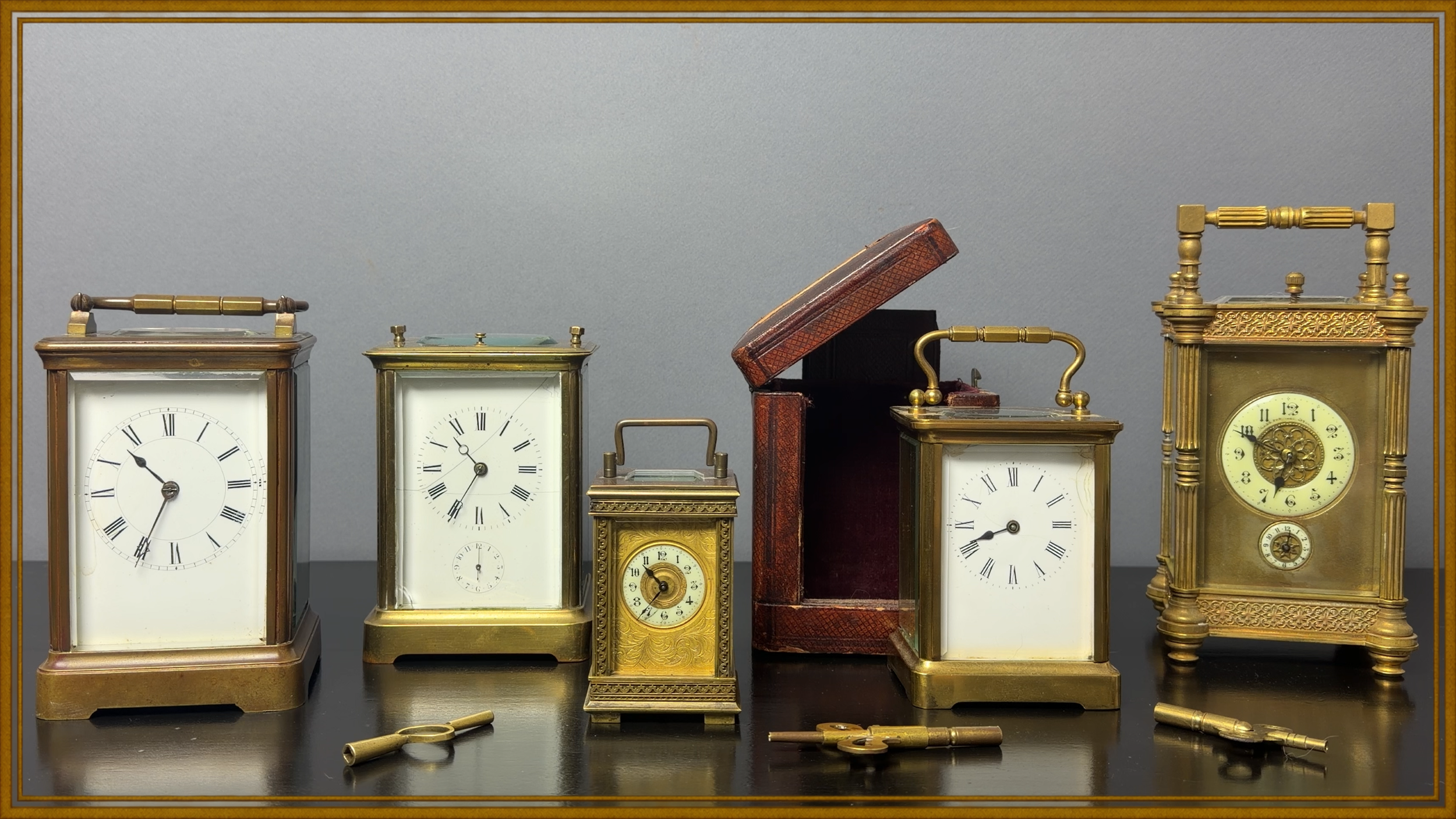
These carriage clocks have witnessed more than a century of changing lives, changing fashions, and changing ways of travelling. The names of those who once owned them may have been forgotten, but the craftsmanship of their makers remains.
We cannot know where these clocks have travelled, whose bedside tables they once occupied, or how many journeys they accompanied. What we can do is ensure that their stories do not end with us.
For that is ultimately what What We Keep is about.
Not ownership. Not possession. Stewardship.
We are merely temporary custodians of objects that have survived generations before us, entrusted with their preservation for those who will follow.
Conservation & Research Note
The clocks featured in this article are part of a private collection assembled through many years of collecting and studying antiques. Although I have extensive experience with antique objects and their conservation, I am not a professionally trained horologist.
The examination and limited maintenance shown in the accompanying episode reflect my own experience and judgment and are presented as documentation, not instruction.
Antique clock movements are delicate, and even seemingly minor adjustments can cause irreversible damage. Readers are strongly advised not to attempt similar work without appropriate training and to consult a qualified horologist when servicing or repairing historic timepieces.
Collection Research
The Jacot and Henri Acier carriage clocks illustrated in this article form part of the What We Keep collection. Maker identification, photographs of their movements and markings, condition observations, and descriptions of the maintenance undertaken are based on direct examination and original documentation prepared for Episode 004, Time Travel — The Carriage Clock.
References & Further Reading
Breguet, Montres Breguet. “Purchase of Three Timepieces by Napoleon Before His Egypt Campaign.” Historical account of Napoleon Bonaparte's acquisition of Breguet travelling clock No. 178 in April 1798.
Antiquorum. The Art of Breguet, Geneva, 14 April 1991, Lot 10. Detailed catalogue description of Breguet travelling clock No. 178, including its construction, complications, and documented sale to Napoleon for 1,500 francs.
https://catalog.antiquorum.swiss/en/lots/lot-174-10
Swiss National Museum. “Napoleon Was a Fan of Breguet,” 18 June 2017. Historical discussion and photograph of Napoleon's surviving Breguet travelling clock.
https://blog.nationalmuseum.ch/en/2017/06/napoleon-was-a-fan-of-breguet/
L'Epée 1839. “Corniche.” Manufacturer's historical discussion of the Corniche carriage-clock case and its distinctive moulded construction.
https://lepee1839.ch/collection/collections-carriage-clock/corniche
Christie's. “Breguet et Fils, Paris, No. 179,” Sale 7864, 8 July 2010. Historical and technical account of Breguet's second carriage clock, including references to No. 178 and the early development of portable clocks.